EuroMedAI research

Research and publications

Regional evidence, policy analysis, and practical frameworks for responsible AI across the Euro-Mediterranean.

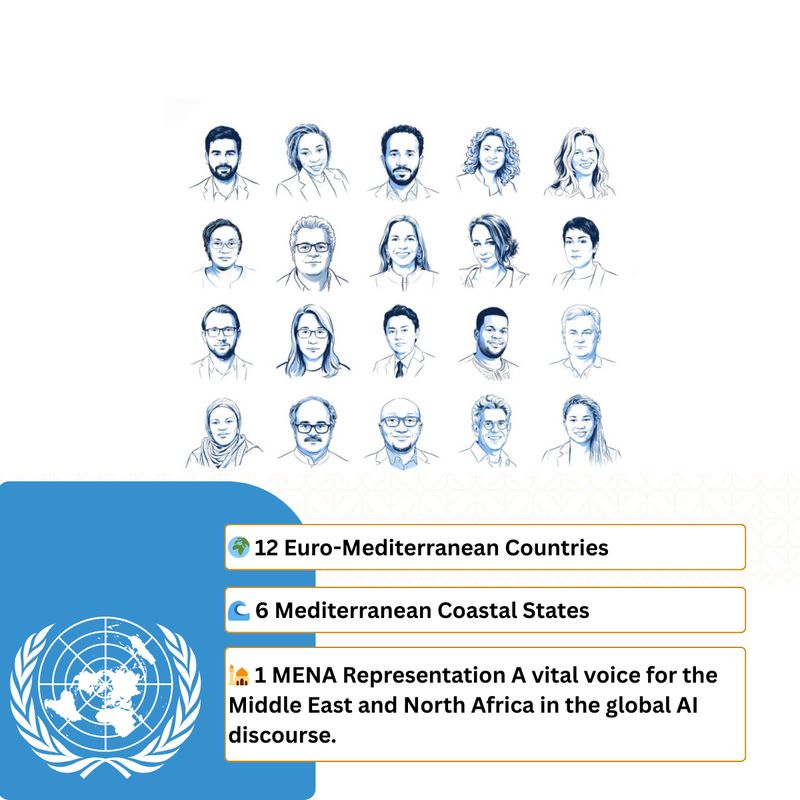
EuroMedAI Submission to the First UN Global Dialogue on AI Governance

EuroMedAI Submission to the First UN Global Dialogue on AI Governance

EuroMedAI's written submission to the first UN Global Dialogue on AI Governance (Geneva, 6–7 July 2026). Drawing on our comparative assessment of AI capacity across nine South Mediterranean countries, the submission makes the case for closing the AI divide as a precondition for legitimate global governance, and sets out concrete proposals: a shared maturity-measurement method, a Minimum Irreducible Capacity floor, a Shared South-Med compute hub, and a Mediterranean AI Fund.

Published Updated May 2026

Mohamed Alouane Ermelinda Kanushi Alejandro Tlaie Boria
Read more
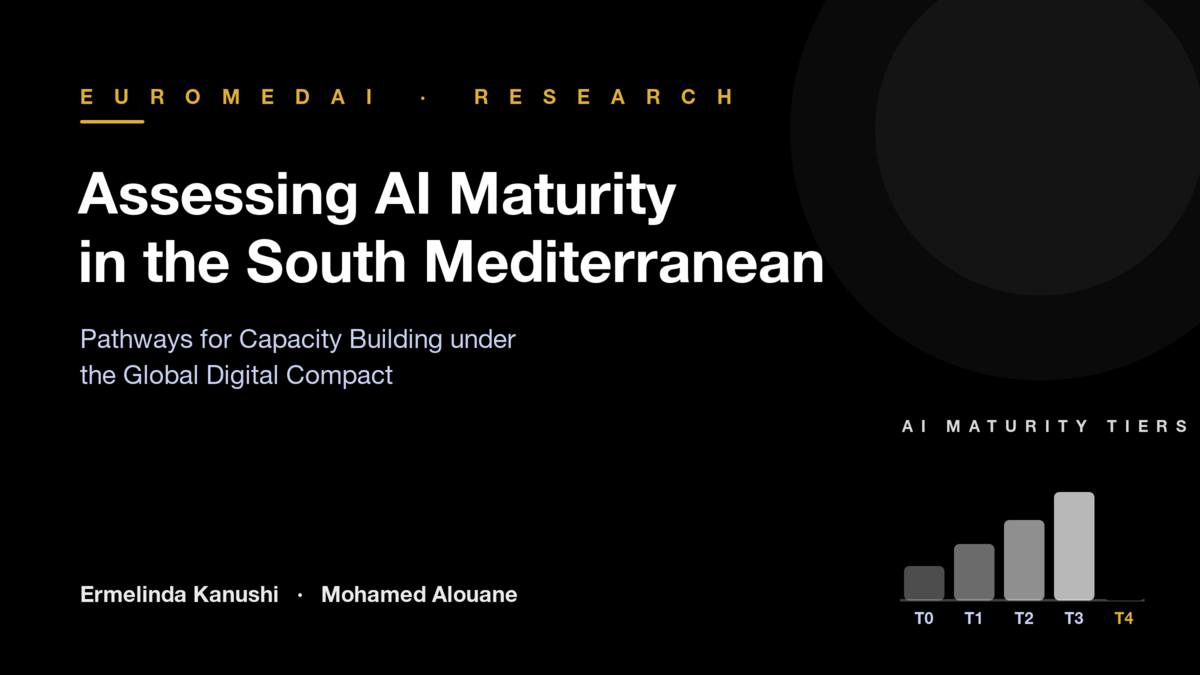
Assessing AI Maturity in the South Mediterranean: Pathways for Capacity Building under the Global Digital Compact

Assessing AI Maturity in the South Mediterranean: Pathways for Capacity Building under the Global Digital Compact

South Mediterranean countries face widening disparities in artificial intelligence (AI) capacity across compute, data governance, skills, adoption, and enabling strategies. Building on the United Nations Global Digital Compact (GDC) and the UN Secretary-General's report A/79/966 on innovative voluntary financing options for AI capacity-building, this chapter contextualizes regional readiness and proposes practical pathways to advance through AI maturity tiers.

Published Updated Nov 2025
Ermelinda Kanushi Mohamed Alouane
Read more
Bridging the AI Divide: A Comparative Maturity Assessment of AI Capacity in the Southern Mediterranean

Bridging the AI Divide: A Comparative Maturity Assessment of AI Capacity in the Southern Mediterranean

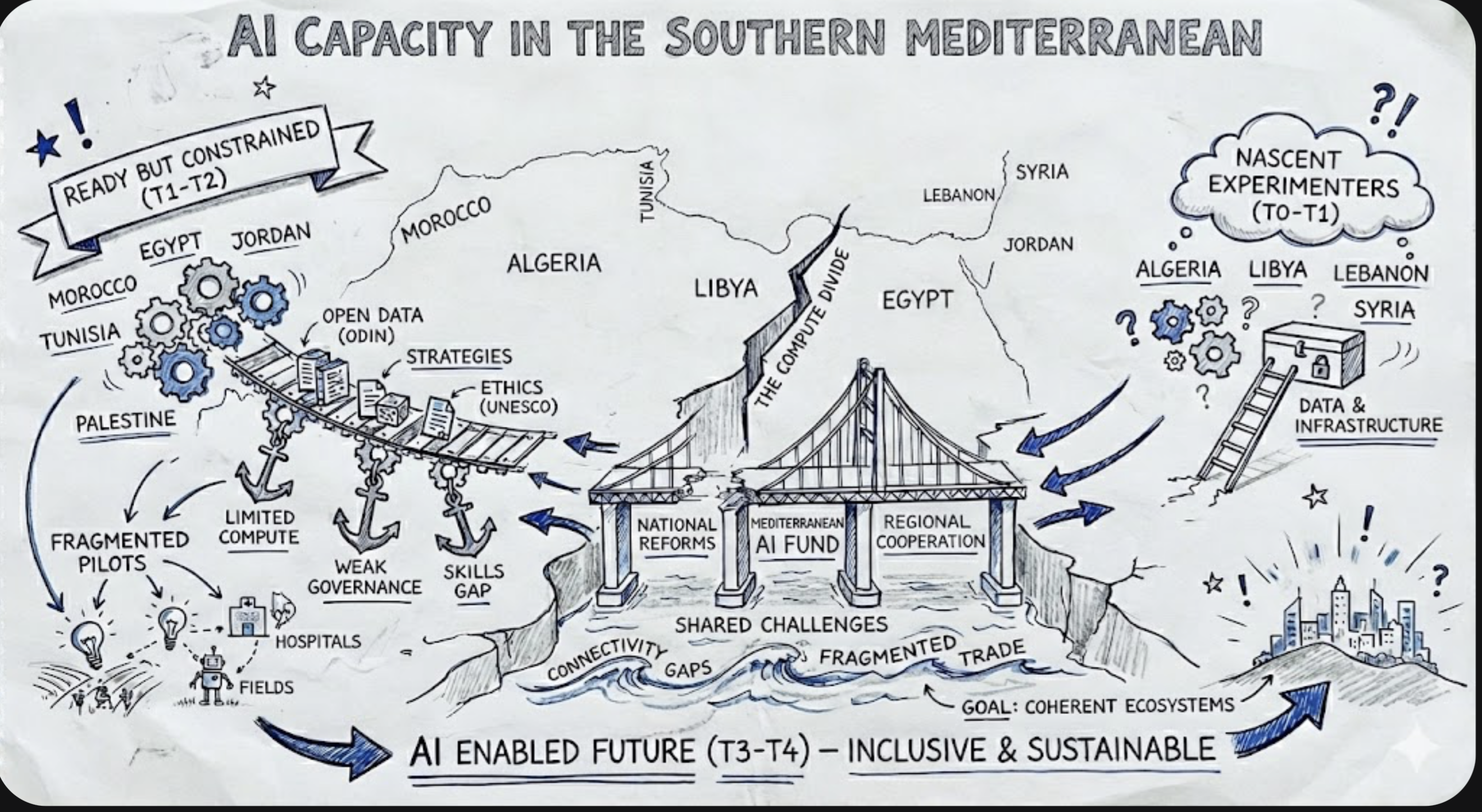
This study applies a UN-inspired AI maturity framework (Tier 0–4) to nine South Mediterranean countries—Algeria, Egypt, Jordan, Lebanon, Libya, Morocco, Palestine, Syria, and Tunisia—combining Government AI Readiness Index scores, Open Data Inventory (ODIN) metrics, and OECD AI Capability Indicators to assess public-sector AI capacity. Results reveal a two-speed trajectory: Morocco, Egypt, and Jordan qualify as 'AI ready' (T2), while the remaining countries remain 'AI nascent' or 'experimenters' (T0–T1), constrained by limited compute, weak data governance, and modest AI-skilled workforces. The paper proposes national and regional policy recommendations—including costed AI strategies, shared compute infrastructure, and cross-border research on Arabic and low-resource languages—to help the region progress toward 'AI enabled' status while ensuring AI supports inclusive, rights-respecting development.

Published Updated Dec 2025
Mohamed Alouane Ermelinda Kanushi Alejandro Tlaie Boria
Read more