From AI Governance Evidence to Local Readiness: Geneva Side Event Recap
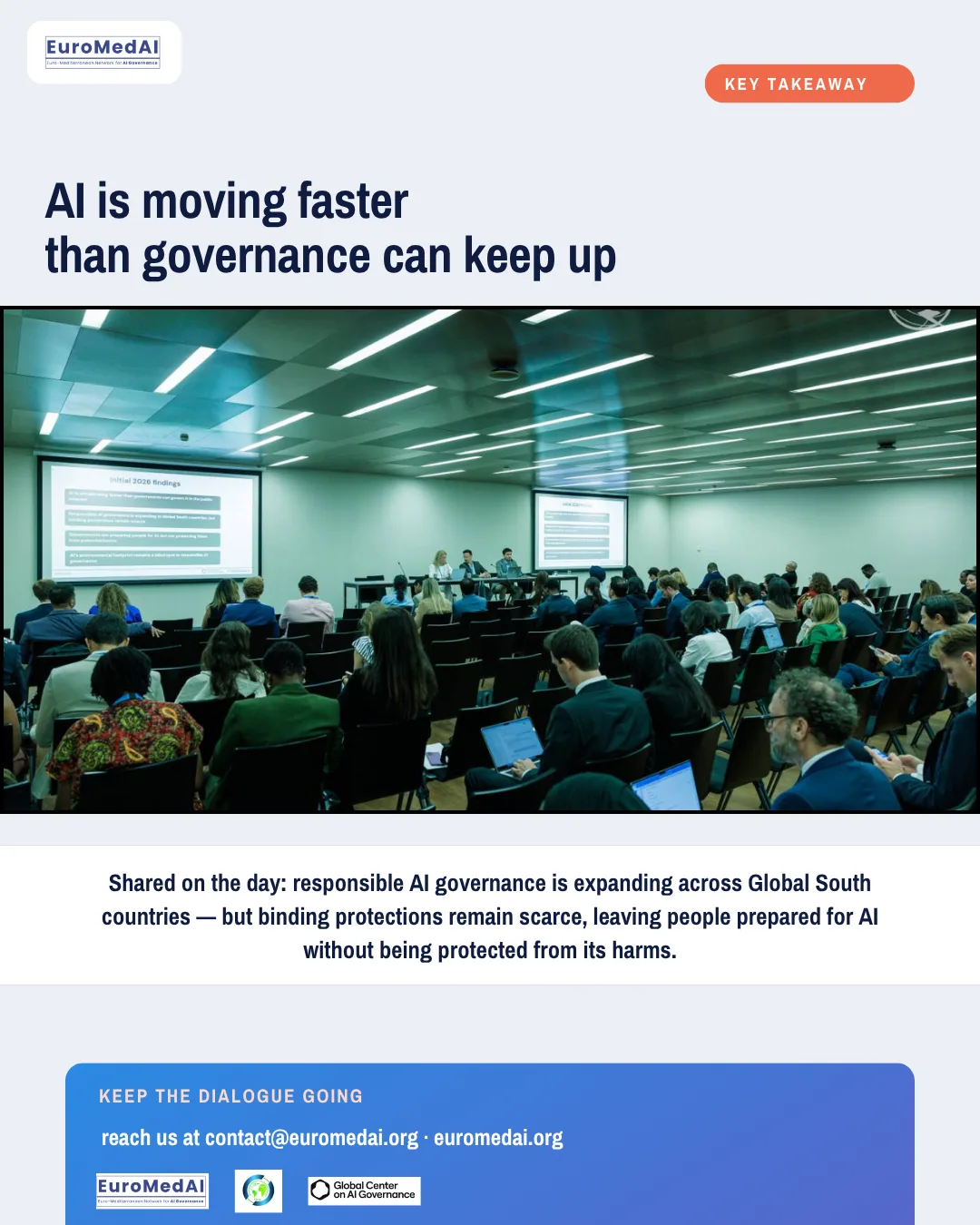
EuroMedAI's official UN side event in Geneva brought AI researchers, UN officials, civil society, public servants, and private-sector actors together to ask how AI governance can close the digital divide facing the Global South.
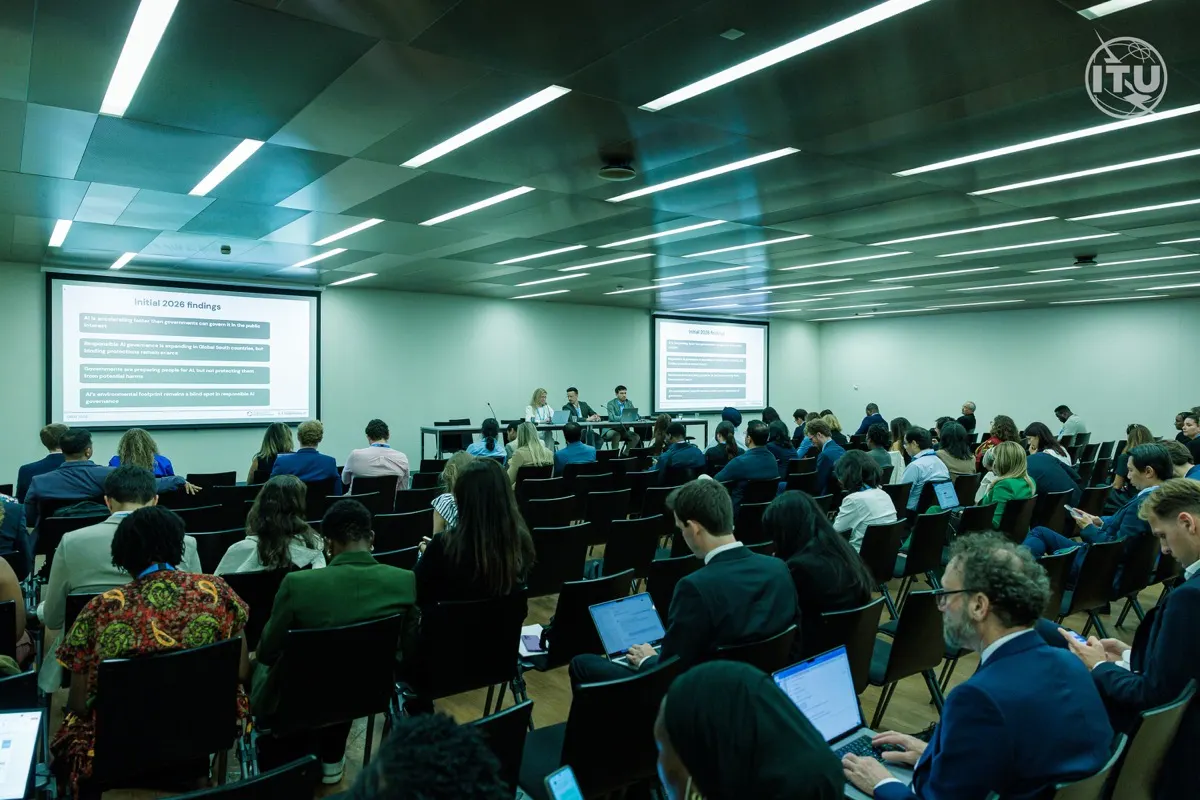
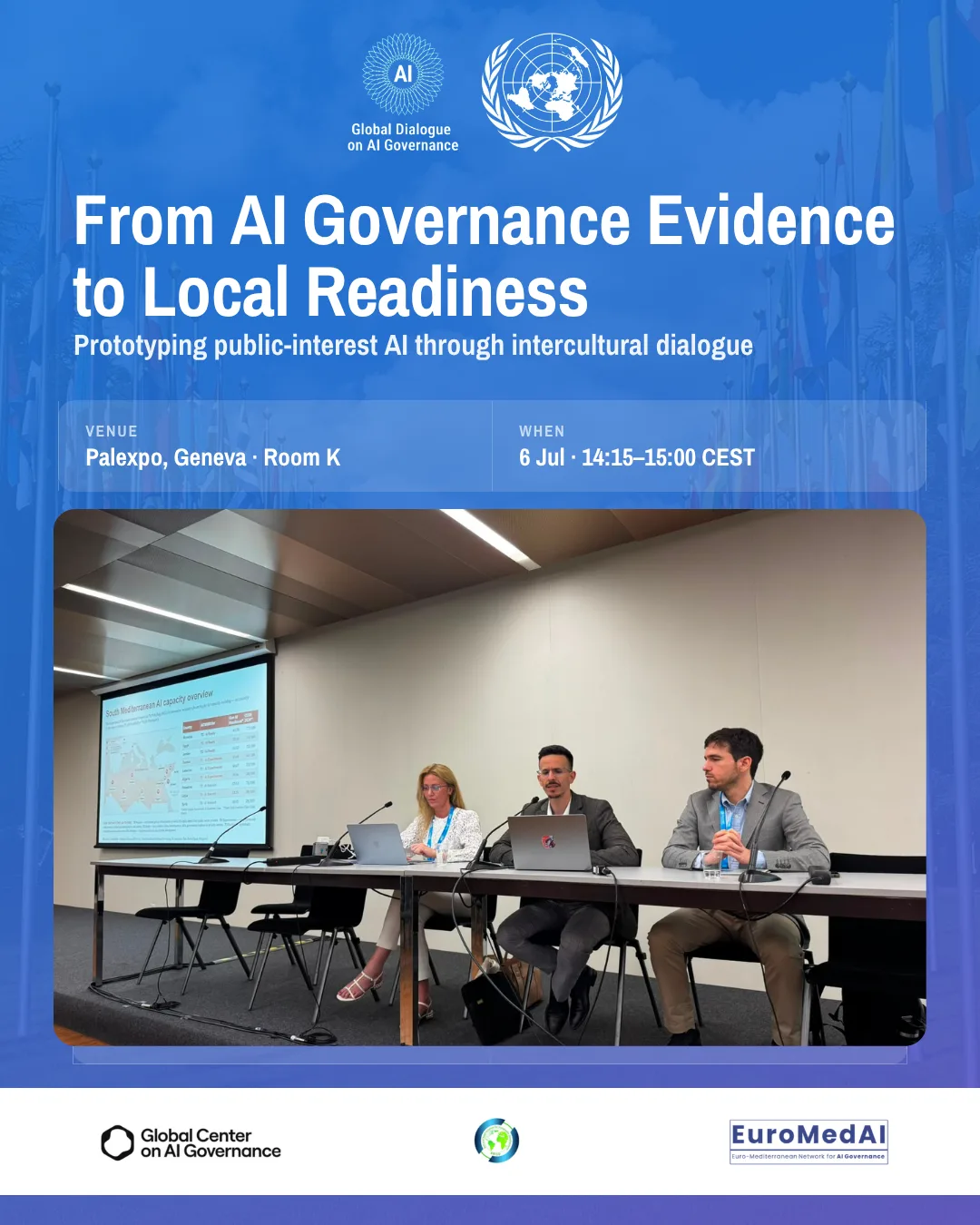
On 6 July 2026, EuroMedAI convened the official UN side event From AI Governance Evidence to Local Readiness: Prototyping Public-Interest AI Through Intercultural Dialogue at Palexpo, Geneva, during the United Nations Global Dialogue on AI Governance.
Held in partnership with BRISD and the Global Center on AI Governance, the session put one practical question at the center of the room: how can AI governance close, rather than widen, the digital divide facing the Global South?
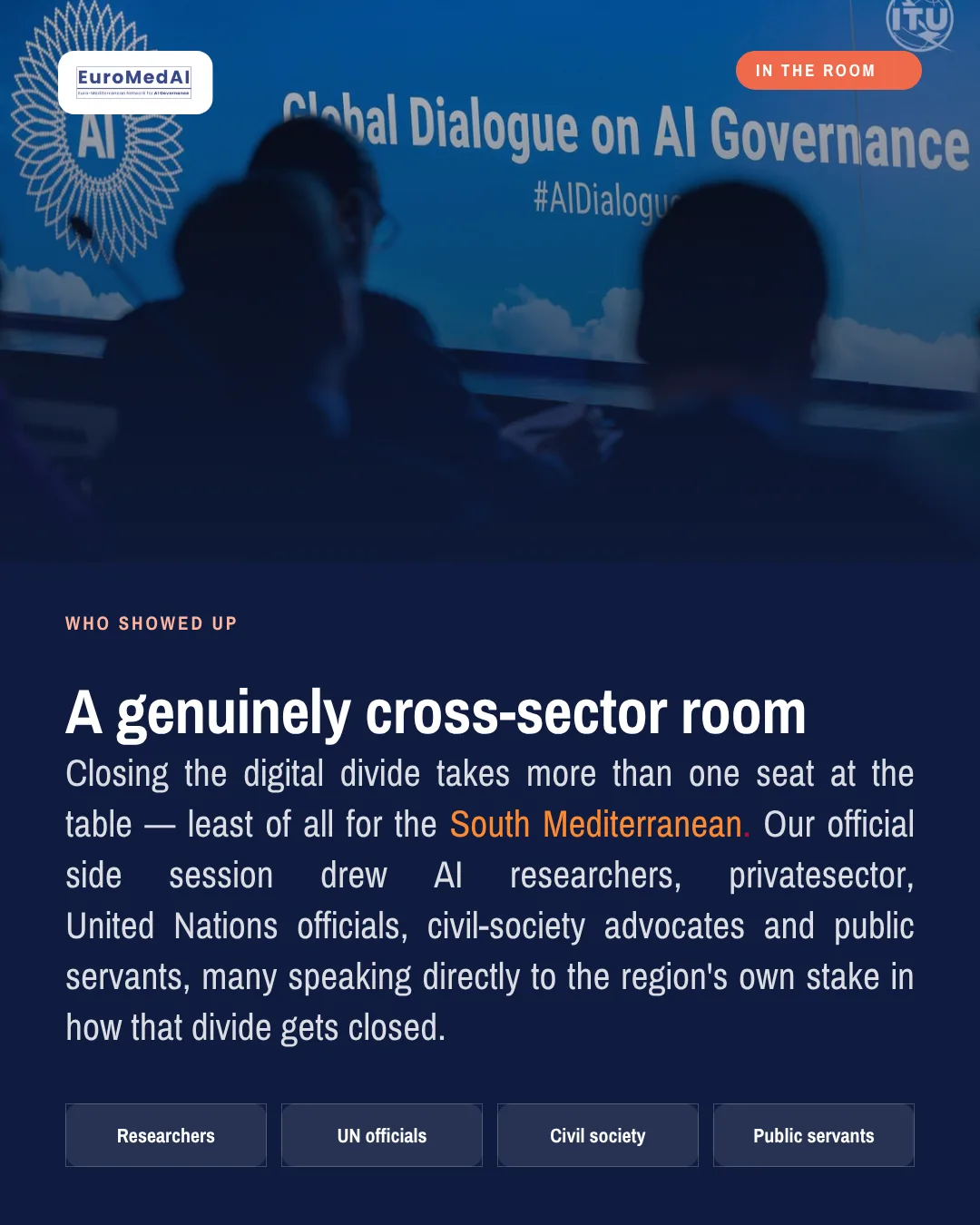
The answer depends on who is present in the room. EuroMedAI convened a genuinely cross-sector discussion with AI researchers, UN officials, civil-society advocates, public servants, and private-sector actors, many speaking directly to the Mediterranean’s own stake in closing that divide.
Why Local AI Readiness Matters
AI governance is no longer only about principles, declarations, or risk language. The real test is whether governance evidence can become local capacity: institutions that can act, public servants who can use AI responsibly, civil society groups that can scrutinize systems, and communities that can shape public-interest AI around their own needs.
For the South Mediterranean and wider Global South, the stakes are especially concrete. Countries are building national AI strategies, data-protection frameworks, compute capacity, and talent pipelines, but binding protections, sustainable financing, and inclusive infrastructure remain uneven. Without those foundations, people may be prepared for AI without being protected from its harms.
Side event recap
What happened in Geneva

A Cross-Sector Room For Public-Interest AI
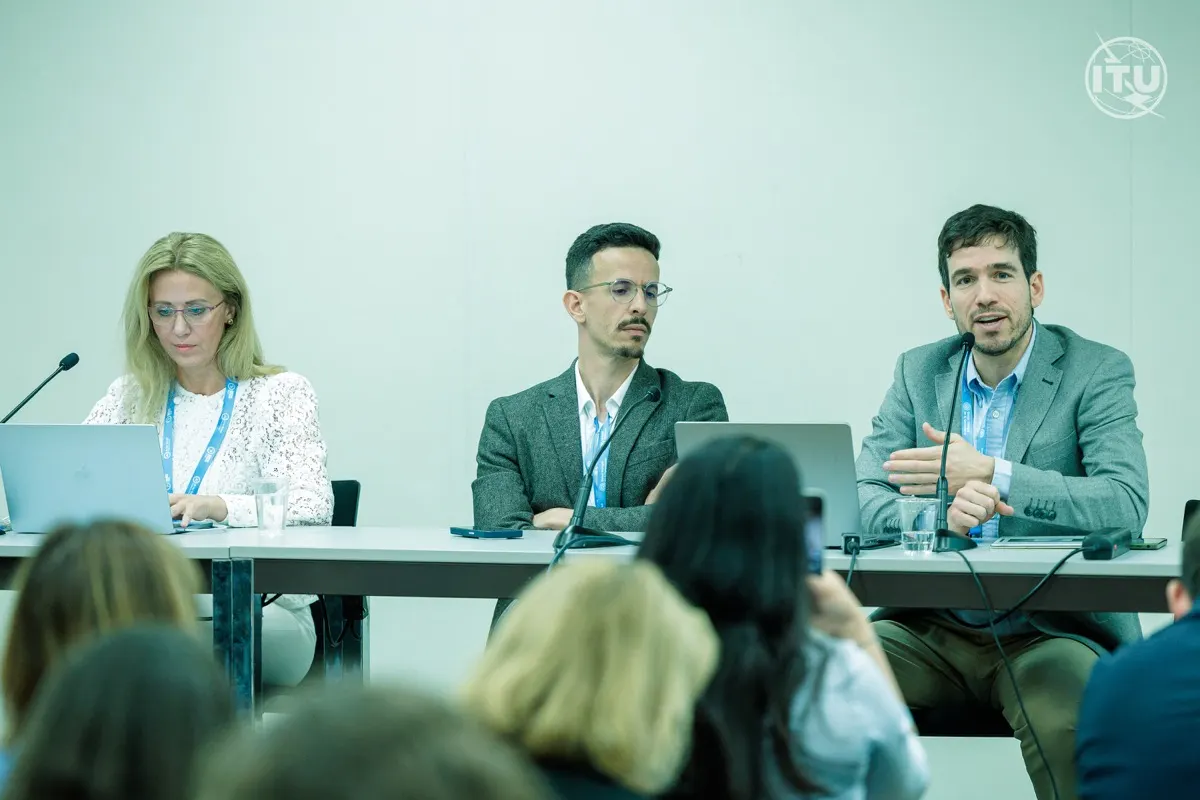
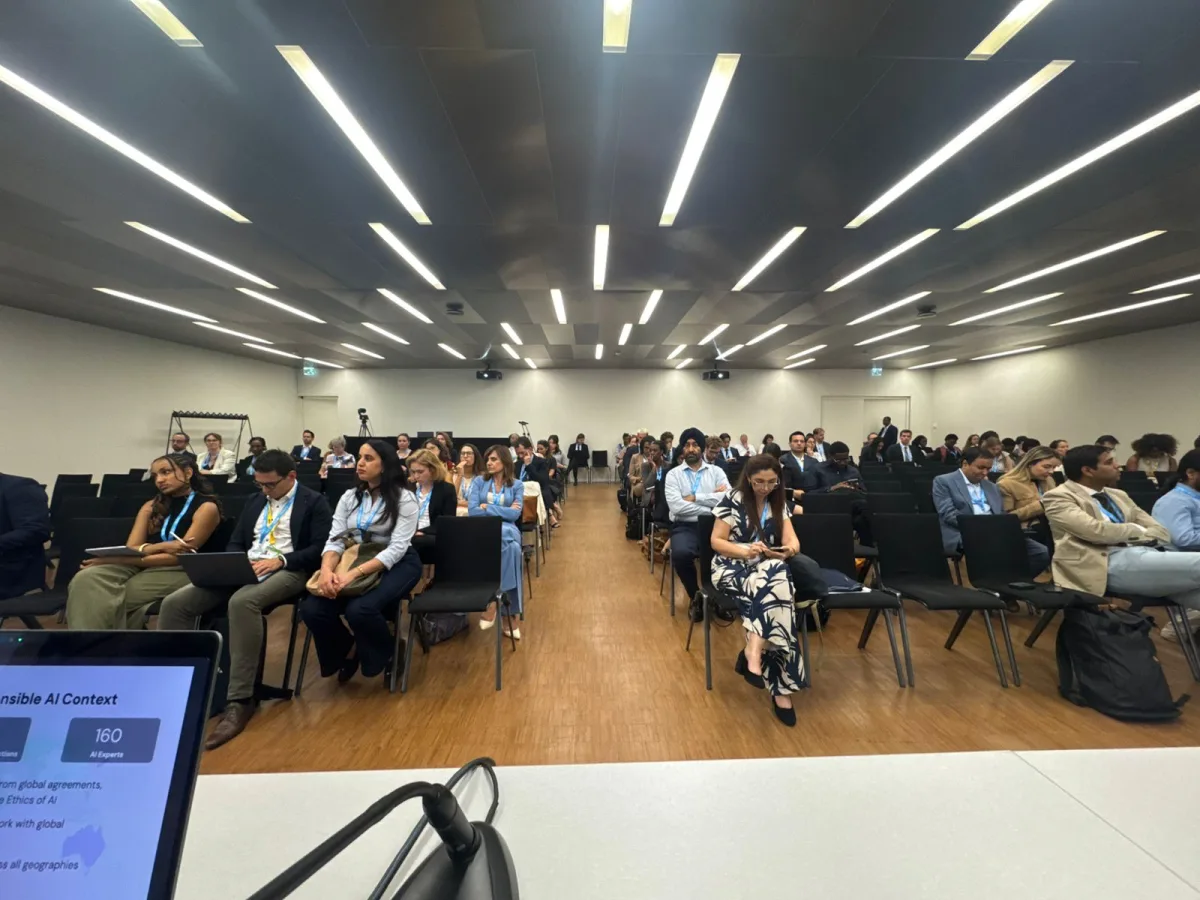
The discussion brought together AI researchers, United Nations officials, civil society advocates, public servants, and private-sector actors. That mix mattered. Closing the AI divide requires more than one policy community, and it requires more than technical adoption alone.
EuroMedAI framed the session around public-interest AI prototypes: practical tools, methods, and governance approaches that can turn high-level AI governance evidence into usable local readiness. The conversation connected global AI governance processes with everyday questions faced by public institutions, civic organizations, and communities across the region.
What The Region Has Already Built
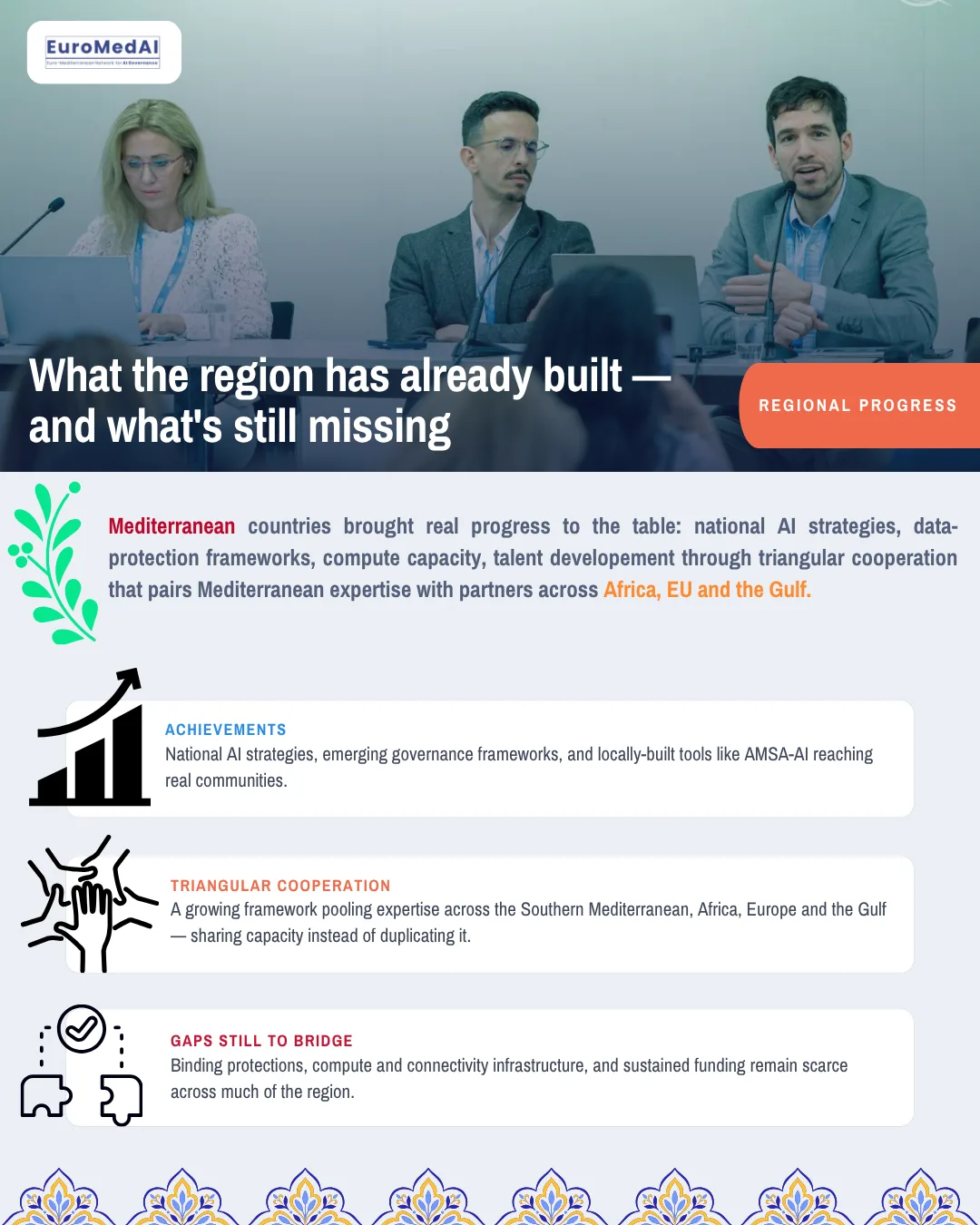
Participants highlighted real progress across Mediterranean countries, including national AI strategies, emerging governance frameworks, data-protection rules, ethics initiatives, locally built tools, pilot AI applications, and talent-development pathways.
Increasingly, that progress is being advanced through triangular cooperation across the Mediterranean, Africa, the European Union, and the Gulf. The region is not waiting to be defined by the AI divide; it is building strategies, institutions, skills, and practical applications that can shape how responsible AI is governed and used.
One message came through clearly: the region is not starting from zero. The challenge is to connect existing work into a stronger readiness ecosystem, where public-interest AI can be tested, governed, financed, and adapted to local contexts.
The Gaps Still To Bridge
The session also surfaced the limits of current progress. Responsible AI governance is expanding across Global South countries, but binding protections remain scarce. Compute and connectivity infrastructure remain uneven. Long-term funding is still difficult to mobilize. Environmental costs are still not central enough in many responsible AI conversations.
That gap between adoption and protection is where the digital divide can deepen. If governments, communities, and civil society are asked to absorb AI faster than they can govern it, readiness becomes a burden rather than a pathway to public value.
Key Takeaway: Governance Must Catch Up To AI
The core takeaway from Geneva was direct: AI is moving faster than governance can keep up. Closing that gap will require better evidence, but also better translation of evidence into local institutions, local skills, local accountability, and local public services.
The recap conversation pointed to three priorities for the next phase:
- Build from existing regional progress: Treat national strategies, local tools, and emerging governance frameworks as foundations to strengthen, not isolated achievements.
- Invest in shared capacity: Pool expertise across the Southern Mediterranean, Africa, Europe, and the Gulf so capacity is shared rather than duplicated.
- Move from AI adoption to AI protection: Ensure that people, institutions, and communities are protected as they are being prepared for AI.
Geneva Was A Start, Not A Conclusion
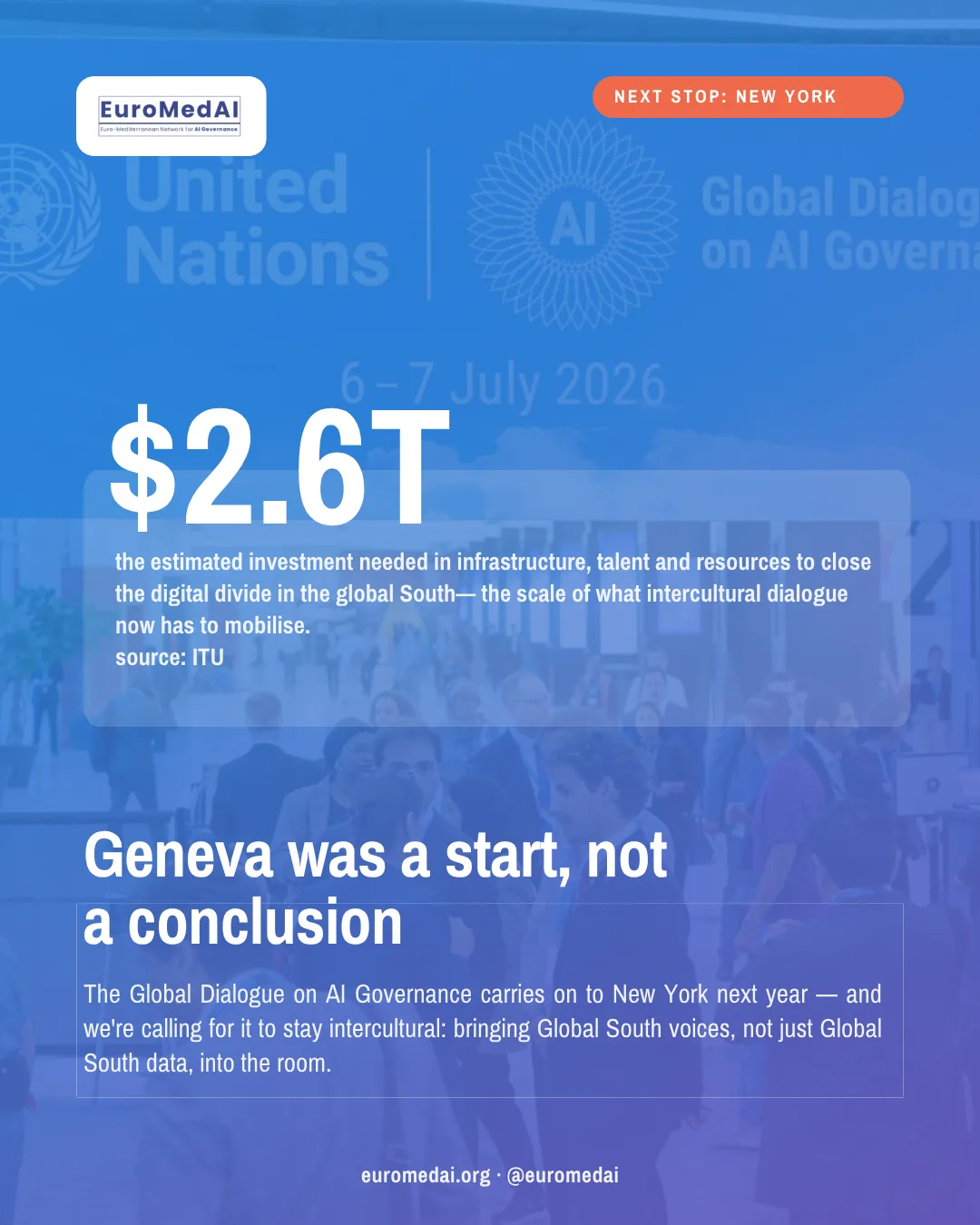
The Global Dialogue on AI Governance will continue in New York next year. EuroMedAI’s message is that the dialogue must stay intercultural, practical, and attentive to the communities most affected by the digital divide.
The scale is significant: ITU’s 2025 Digital Infrastructure Investment Initiative report estimates a digital infrastructure financing gap of about $1.6 trillion for 2025–2030 to reach universal meaningful connectivity above 20 Mbit/s for everyone. The estimate includes capital expenditure for fixed and wireless networks, backbone infrastructure, and data centres, as well as operating expenditure through 2030. This gap makes the next phase of global AI governance impossible to separate from financing, institutional capacity, and long-term cooperation.
Global South voices should not be treated only as data points in global AI governance debates. They must be present in the room as agenda-setters, prototype builders, policy shapers, and accountability partners.
This is the spirit EuroMedAI will carry forward: bringing Global South voices, not just Global South data, to the table.
Read the original event page: From AI Governance Evidence to Local Readiness.
Share