Geneva AI Governance Live: Euro-Mediterranean Signals From the UN Global Dialogue
Live EuroMedAI coverage of the first UN Global Dialogue on AI Governance in Geneva, tracking country initiatives, side events, institutional announcements, video links, and Mediterranean policy signals.
Updated
Jul 12, 2026
Scope
UN dialogue, country actions, media
Method
Source-linked updates only
This page follows the first United Nations Global Dialogue on AI Governance, convened in Geneva on 6-7 July 2026, with a Euro-Mediterranean focus: country participation, public-interest AI, capacity-building, multilingual inclusion, and the AI divide.
It is a public news feed, not an internal monitoring log. Each item below is tied to an official or institutional source.
Key Developments
16:21 CEST, 12 July - Egypt’s WSIS Chair’s Summary adds measurable implementation language after Geneva week
Source: Egypt MCIT: ICT Minister Presents Egypt WSIS Chairship Summary at Closing Ceremony, Egypt MCIT: ICT Minister Signs MoU with Rwandan Counterpart, Meets Officials from Sudan, UN, ICANN, TikTok, Egypt MCIT: ICT Minister Explores Cooperation Opportunities with Officials from Estonia, Nigeria, AU, Smart Africa, and UN Web TV Day 2 closing sessions
Egypt’s Ministry of Communications and Information Technology published a new 11 July 2026 account of ICT Minister Raafat Hendy’s WSIS Forum 2026 Chair’s Summary in Geneva. MCIT says the summary stressed moving from commitments to implementation, translating digital strategies into services, skills, jobs and opportunities, keeping AI human-centered and ethically and responsibly used, and developing roadmaps and measurable indicators for WSIS mandates before reporting to the UN Commission on Science and Technology for Development in 2027. The same MCIT source trail says Egypt presented its AI governance vision in an ESCWA session, presented the National AI Strategy and responsible-AI guidance in sessions with the Council of Europe and Rwanda, and received a WSIS Prizes certificate of distinction for the Digital Citizenship and Online Safety initiative. In a related 10 July MCIT item, Hendy met UN Under-Secretary-General and Special Envoy for Digital and Emerging Technologies Amandeep Singh Gill to discuss MCIT-UN cooperation on AI governance, interoperability, flexible governance frameworks, regulatory sandboxes, technical reviews of AI systems, and the Egyptian Center for Responsible AI.
Confirmed fact: These are official Egypt MCIT reports from Geneva Digital Week and WSIS Forum follow-through. They are not a UN Global Dialogue closing declaration, negotiated outcome, co-chair summary, transcript, or country statement from the Dialogue’s closing plenary.
EuroMedAI view: This is a stronger Southern Mediterranean implementation signal than another process update: indicators, regulatory sandboxes, technical reviews, online-safety recognition, responsible-AI guidance and ODET/UN cooperation are the kinds of institutional tools Mediterranean administrations can compare and adapt after Geneva.
12:28 CEST, 12 July - ITU closeout shifts Geneva week from dialogue to delivery architecture
Source: ITU: AI for Good and WSIS Forum 2026 close with global push for AI for everyone, ITU: AI ambition to action - The AI for Good Lab initiative, ITU: AI for Good 2026 - My key takeaways, and ITU submarine-cable resilience report release
ITU’s 10 July Geneva Digital Week closeout says the AI for Good Global Summit and WSIS Forum 2026 brought together more than 12,000 participants from 177 countries after the UN Global Dialogue, and frames the week as a handoff from AI governance dialogue toward implementation. The release connects the Dialogue to the first meeting of the AI for Good Global Commission, the new Focus Group on Agentic AI, new AI Skills Coalition partners, WSIS digital-development tracks, the Partner2Connect milestone, and submarine-cable resilience work. In a separate ITU News item, the AI for Good Lab is described as a new initiative for developing and emerging economies that combines AI readiness and policy support, skills development, and public AI infrastructure, including local datasets, compute resources, open-source toolkits and open-weight models. ITU’s standards director also flags a structural capacity gap: only 32 countries have AI-specialized data centres, while developing countries other than China host half of global Internet users but less than 10 percent of global data-centre capacity.
Confirmed fact: These are official ITU/Geneva Digital Week follow-through items. They are not a UN Global Dialogue closing declaration, negotiated outcome, transcript, co-chair summary, or Mediterranean national commitment.
EuroMedAI view: This is the clearest post-Geneva implementation map so far: skills, standards, public AI infrastructure, connectivity, data centres, compute, open models and resilient cables are the practical foundations Mediterranean institutions need if global AI governance is to reduce, rather than widen, the AI divide.
14:30 CEST, 10 July - Egypt and UNDP move responsible-AI governance toward sandbox implementation
Source: Egypt MCIT: ICT Minister Talks Cooperation with Kenya, World Bank Officials, Witnesses LOI Signing with UNDP, Egypt MCIT press-release index, and UNDP Egypt
Egypt’s Ministry of Communications and Information Technology says ICT Minister Raafat Hendy witnessed the signing of a Letter of Intent between MCIT and UNDP on strengthening national capacities for responsible AI governance during the Geneva WSIS Forum 2026 week. MCIT says the cooperation framework includes exploring an AI Sandbox tailored to Egypt for testing and evaluating AI systems before wider deployment, aligning systems with responsible-AI principles, regulatory requirements and the public interest, and building operational auditing and evaluation capacity. The same MCIT release says Hendy met World Bank Vice President for Digital and AI Sangbu Kim on digital transformation cooperation, including MSME participation in the digital economy, GovTech innovation, responsible AI and digital skills linked to job opportunities.
Confirmed fact: This is an official Egypt MCIT report on Geneva Digital Week follow-through and Egypt-UNDP/World Bank cooperation. It is not a UN Global Dialogue closing declaration, co-chair summary, negotiated outcome, transcript, Resource Hub commitment, or Mediterranean country pledge from the Dialogue itself.
EuroMedAI view: This is a practical Southern Mediterranean governance signal: regulatory sandboxes, audit/evaluation capacity, responsible-AI principles and digital-skills links are the kinds of implementation mechanisms needed after global AI governance discussions leave Geneva.
16:31 CEST, 9 July - ITU opens an agentic-AI trust and identity standards track
Source: ITU press release: ITU launches global standards initiative to build trust in AI behaviour and identity, ITU Focus Group on Trust and Identity for Humans and Agentic AI, and ITU Media Centre
ITU says it has announced a new Focus Group on Trust and Identity for Humans and Agentic AI at the AI for Good Global Summit. The group will develop frameworks for trusted digital identity and for keeping AI-agent behaviour trustworthy and accountable across the lifecycle, including risks such as autonomous agents impersonating people or organisations and taking unauthorised actions across interconnected systems. ITU says the work will cover common terminology, reference architectures for identity, trust, agent discovery and interoperability, lifecycle assurance models, digital-identity and credential interoperability, security criteria and benchmarks, and a standardisation roadmap. The focus group will report to ITU-T Study Group 17, with first meetings planned for Paris in November 2026 and Geneva in January 2027.
Confirmed fact: This is official ITU/AI for Good standards follow-through during Geneva Digital Week. It is not a UN Global Dialogue closing declaration, co-chair summary, negotiated outcome, transcript, Resource Hub commitment, or Mediterranean country pledge.
EuroMedAI view: This is a practical governance signal because agent identity, accountability, human control and interoperability will matter for cross-border public services, financial transactions, critical infrastructure, procurement and public-sector AI adoption across the Mediterranean.
15:54 CEST, 9 July - Egypt chairs WSIS Forum follow-through and logs Egypt-EU AI cooperation talks
Source: Egypt MCIT: ICT Minister Chairs WSIS Forum 2026 in Geneva, Egypt MCIT: ICT Minister Meets Officials from Iraq, Cambodia, European Commission at Geneva Digital Week to Discuss Cooperation, and WSIS Forum 2026
Egypt’s Ministry of Communications and Information Technology says Egypt, represented by MCIT, has assumed the chairmanship of WSIS Forum 2026 from South Africa during the opening session in Geneva. The ministry says ICT Minister Raafat Hendy will lead the Forum’s high-level sessions and ministerial tracks, steer strategic discussions with the ITU General Secretariat, and present the Chair’s Summary during the closing session. In the same Geneva Digital Week source trail, MCIT reports a meeting between Hendy and European Commission DG CONNECT Director-General Roberto Viola on cooperation in AI, quantum computing, digital transformation, personal data protection, digital infrastructure, research and innovation, including AI capacity-building for SMEs and responsible AI use.
Confirmed fact: These are official Egypt MCIT and WSIS Forum follow-through items from Geneva Digital Week. They are not a UN Global Dialogue closing declaration, co-chair summary, negotiated outcome, transcript, Resource Hub commitment, or Mediterranean country pledge from the Dialogue itself.
EuroMedAI view: Egypt’s WSIS chairmanship gives a Southern Mediterranean government a visible role in the implementation track that follows the UN Dialogue. The Egypt-EU cooperation item is also relevant because capacity-building, SME adoption, responsible AI, data governance and digital infrastructure are exactly where Euro-Mediterranean AI governance becomes practical.
11:37 CEST, 9 July - WSIS Prizes add another implementation signal after the Dialogue week
Source: ITU press release: WSIS Prizes honour top tech solutions for digital development, ITU Media Centre, and WSIS Forum 2026
ITU’s Media Centre now lists a 9 July 2026 WSIS Prizes release, describing the 15th edition of the awards programme as recognising technology projects for digital development. The release is categorised by ITU under Digital inclusion and Broadband/Connectivity, and appears above the 8 July Partner2Connect and Geneva Digital Week releases in the official ITU listing.
Confirmed fact: This is official ITU/WSIS Forum implementation context. It is not a UN Global Dialogue closing declaration, co-chair summary, AI Resource Hub commitment, or Euro-Mediterranean national AI policy statement.
EuroMedAI view: The WSIS Prizes matter to the AI-governance source trail because implementation capacity is visible in projects, not only plenary language. For Mediterranean actors, award and stocktaking channels can help identify replicable public-interest digital projects linked to connectivity, inclusion, skills, multilingual access, and local AI readiness.
07:15 CEST, 9 July - ITU Partner2Connect milestone reinforces the digital-foundations side of the AI divide
Source: ITU press release: Partner2Connect surpasses USD 100 billion in commitments, ITU Media Centre, and WSIS Forum 2026
ITU’s Media Centre now lists an 8 July 2026 Partner2Connect release saying the initiative has surpassed USD 100 billion in commitments to connect the world. The listing frames the milestone as a global coalition achievement for universal meaningful connectivity at WSIS Forum 2026, which is running in Geneva during the same digital-governance week as AI for Good. The WSIS Forum 2026 page identifies the forum as a multistakeholder platform for digital cooperation, with themes including artificial intelligence, digital public infrastructure, cybersecurity, multilingual digital ecosystems and digital divides.
Confirmed fact: This is official ITU/WSIS digital-inclusion follow-through. It is not a Global Dialogue closing declaration, co-chair summary, national AI policy statement, Resource Hub commitment, or Mediterranean country pledge.
EuroMedAI view: Connectivity is not separate from AI governance. For Mediterranean institutions, broadband access, digital public infrastructure, skills and multilingual ecosystems are baseline conditions for participating in AI capacity-building and for avoiding a deeper AI divide.
11:06 CEST, 8 July - ITU frames AI for Good and WSIS Forum as Geneva implementation follow-through
Source: ITU press release: From principles to practice, AI for Good Global Summit 2026, and WSIS Forum 2026
ITU says the AI for Good Global Summit and WSIS Forum 2026 are holding formal opening ceremonies in Geneva today and will build on the UN’s AI Dialogue by connecting policy principles with practice. The release frames AI for Good as the UN platform for showcasing and scaling real-world AI solutions, says Scientific Panel members will continue the preliminary-report discussion through AI for Good keynote and working-group sessions, and says the first AI for Good Global Commission meeting will focus on practical pathways to strengthen trust, expand access, and unlock AI’s potential for real-world challenges. ITU also notes that WSIS Forum 2026 continues the UN’s long-running multistakeholder digital-development platform, with the WSIS mandate extended to 2035.
Confirmed fact: This is official ITU/Geneva Digital Week follow-through after the UN Global Dialogue. It does not announce a negotiated Global Dialogue outcome, co-chair summary, transcript, or Euro-Mediterranean national commitment.
EuroMedAI view: The implementation forums now matter because capacity-building, access, trust, WSIS digital-development channels, and AI for Good solution tracks are where Mediterranean institutions may find practical entry points after the Geneva Dialogue.
10:33 CEST, 8 July - UN News confirms child-rights AI coalition with four Euro-Med signatories
UN News reports that the Coalition for Children’s Rights and Protection in the Age of Artificial Intelligence launched in Geneva during the Global Dialogue. The article says the coalition’s founding UN members are DGC, OHCHR, ITU, the UN Office for Digital and Emerging Technologies, UNICEF, and UNESCO. It also reports that 17 countries have signed on so far, including France, Italy, Morocco, and Spain from the Euro-Mediterranean scope.
Confirmed fact: This is a UN News-reported coalition launch and signatory list. It is not a negotiated Global Dialogue outcome and does not by itself define national AI-policy commitments beyond participation in the coalition.
EuroMedAI view: This is the clearest new Euro-Mediterranean policy signal since the closing block: child safety, children’s rights, education, voice, and oversight are moving from a scientific-panel concern into a multi-stakeholder coalition with Mediterranean country participation.
10:28 CEST, 8 July - UN News Day 2 accountability coverage includes a Morocco intervention
Source: UN News article on AI accountability at the Global Dialogue
UN News reports that accountability took centre stage on Day 2 of the Global Dialogue, including legal responsibility for harm, human-rights risks, environmental and data-centre impacts, and gendered online abuse. The same article attributes an intervention to Amal El Fallah Seghrouchni of Morocco, warning that governance systems need to understand the “black boxes” of AI and that lawyers, sociologists, and even AI researchers may lack the tools to fully understand complex large-language-model behaviour.
Confirmed fact: This is an official UN News account of a Day 2 debate and includes a named Moroccan intervention. It is not a national closing statement, co-chair summary, or negotiated outcome.
EuroMedAI view: The Morocco intervention connects Mediterranean participation to a practical accountability problem: public institutions cannot govern AI systems effectively if model behaviour, procurement risks, and rights impacts remain technically opaque to regulators, courts, researchers, and civil society.
13:21 CEST - UN confirms the Dialogue continues beyond Geneva through a 2027 New York session
Source: UN Global Dialogue official homepage, UNESCO opening release, and Day 2 closing sessions on UN Web TV
The UN homepage describes the Global Dialogue as a recurring platform and confirms that, after the first Geneva session on 6-7 July 2026, a second session will follow in New York in May 2027. UNESCO’s opening release also identifies the Dialogue’s joint secretariat as ITU, UNESCO, the UN Office for Digital and Emerging Technologies, and the Executive Office of the Secretary-General.
Confirmed fact: This is a process update. It confirms the follow-up architecture and secretariat composition; it does not yet confirm any closing outcome, negotiated text, or country commitment from the Geneva session.
EuroMedAI view: For Mediterranean actors, the 2027 session creates a policy window to turn Geneva participation into proposals on AI capacity, multilingual inclusion, public-sector readiness, and regional cooperation. EuroMedAI will watch whether the Resource Hub and follow-up process create accessible channels for smaller administrations, cities, universities, and civil society organisations.
10:32 CEST - Annotated agenda confirms Euro-Med roles in Day 2 rights and Resource Hub tracks
Source: UN Global Dialogue official programme, annotated agenda PDF, Day 2 closing sessions on UN Web TV
The UN annotated agenda confirms several Euro-Mediterranean and EU-linked roles on Day 2. In the human-rights cluster, Oscar Lopez Agueda, Spain’s Minister for Digital Transformation and the Civil Service, is listed as a thematic cluster co-chair; Amal El Fallah Seghrouchni, Morocco’s Minister Delegate, is listed in Panel 1; and Clara Chappaz, France’s Ambassador for AI and Digital Affairs, is listed as moderator for Panel 2. In the AI governance initiatives session, the agenda lists Hoda Baraka, Egypt’s National AI Lead, and Roberto Viola, Director-General of the European Commission’s DG CONNECT, alongside OECD, ISO, ITU, UNESCO, UNDP and other institutional speakers.
Confirmed fact: This confirms agenda roles and session placement. It does not attribute statements, commitments or national positions unless official transcripts or country releases become available.
EuroMedAI view: The Day 2 lineup puts Mediterranean public-sector AI capacity, rights safeguards, and EU interoperability questions into the same institutional frame. That is the practical bridge EuroMedAI is watching: whether global guidance turns into implementable support for ministries, regulators, cities, universities and civil society across both shores.
10:24 CEST - Scientific Panel report is available, with launch video and child-safety focus
Source: Independent International Scientific Panel on AI preliminary report page, full report PDF, executive summary PDF, and report launch on UN Web TV
The UN Scientific Panel’s Preliminary Report of the Independent International Scientific Panel on AI is now available in full and executive-summary formats. The Panel frames the report as a first independent scientific assessment of AI opportunities, risks, and impacts, with evidence organised across seven domains: AI advances and trajectories; applications in science, health, education, and agriculture; economic implications; security, systems, and environmental implications; human rights, information, and democracy; cultural and individual flourishing, autonomy, and child safety; and management, governance, and reliability.
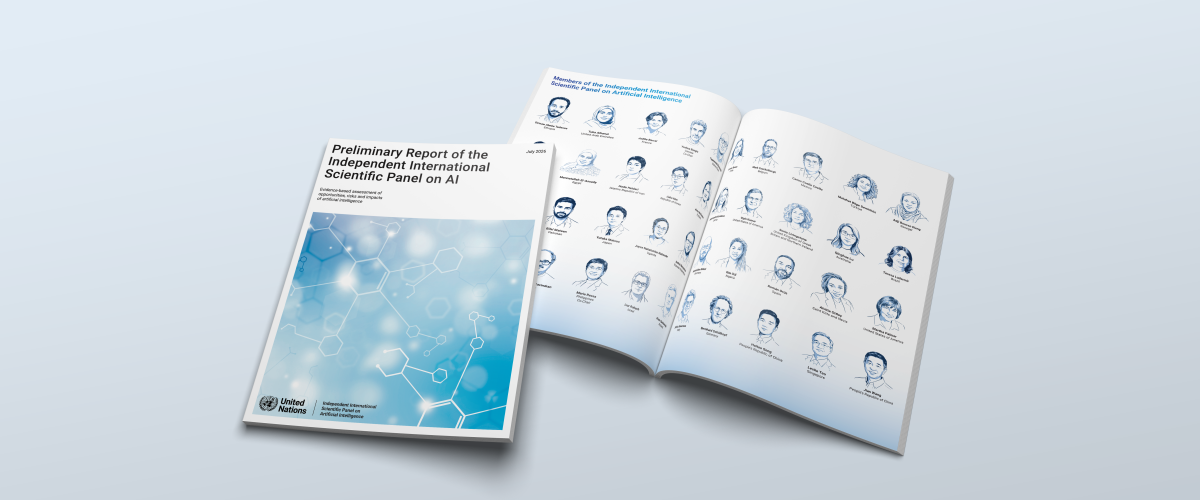
Why it matters for the Euro-Mediterranean region: The report gives Mediterranean governments and institutions a shared evidence base for AI policy, including child safety, education, culture, human rights, and governance reliability. Those issues are central for public-sector AI deployments that affect young people, schools, cultural identity, and civic trust.
10:18 CEST - UNESCO highlights inclusion, continuity, and the AI divide
Source: UNESCO press release on the opening of the UN Global Dialogue
UNESCO’s opening release frames the Dialogue as a response to uneven AI governance: rules, standards, and procurement frameworks are already emerging, but countries with advanced AI sectors have had disproportionate influence. UNESCO also notes that consultations since January 2026 drew more than 1,500 written submissions and that more than 500 submissions called for the process to continue beyond July.
The release says government submissions ranked capacity-building first, while most other stakeholder groups prioritised safety. It also connects inclusive AI governance to the estimated 2.2 billion people still outside the digital world and highlights the need to protect cultural and linguistic diversity.
Why it matters for the Euro-Mediterranean region: These priorities map directly onto Mediterranean needs: capacity-building for public institutions, safety and accountability in deployment, connectivity gaps, and language inclusion for Arabic, Amazigh/Tamazight, and other regional languages.
10:08 CEST - UN programme points to an AI Resource Hub launch segment
Source: UN Global Dialogue official programme and AI governance initiatives concept note
The UN programme lists a Day 2 session on “AI governance initiatives and approaches: experiences, lessons and complementarities” and says it includes a launch segment for the UN AI Resource Hub: Capacity Building and Fellowship Activities.
Why it matters for the Euro-Mediterranean region: If the Resource Hub becomes a practical route into training, fellowships, implementation support, or governance tooling, it could be relevant for Mediterranean public institutions, universities, and civil-society organisations working on responsible AI capacity.
09:45 CEST - Day 2 puts safety, interoperability, and human rights at the centre
Source: UN Global Dialogue official programme, cluster 3 concept note, and cluster 4 concept note
The second day of the Dialogue focuses on two policy tracks: safe, secure and trustworthy AI, including interoperability between governance approaches, and human rights, including transparency, accountability, and human oversight.
EuroMedAI view: These are the issues that determine whether AI governance works in public services: legal accountability, oversight capacity, risk management, and compatibility between national, EU, and international frameworks.
17:05 CEST, 6 July - ITU announces AI for Good Global Commission follow-through
Source: ITU press release on the AI for Good Global Commission and ITU media advisory for AI for Good Global Summit 2026
ITU says the new AI for Good Global Commission will hold its inaugural meeting during the AI for Good Global Summit 2026 in Geneva. The announcement links Geneva’s AI week to practical cooperation on trust, access, impact, digital divides, and developing-country participation.
Why it matters for the Euro-Mediterranean region: The Commission creates a follow-through forum after the UN Dialogue. The key question is whether access commitments become concrete support for compute, connectivity, skills, multilingual resources, and public-interest AI deployment in Southern and Eastern Mediterranean contexts.
11:25 CEST, 6 July - Scientific Panel presents preliminary AI assessment
Source: UN Global Dialogue official programme and UN media advisory
The Dialogue includes the first public presentation of the preliminary report by the Independent International Scientific Panel on AI. The UN programme describes the report as an evidence base for the Global Dialogue, developed by experts from academia, industry, civil society, and the technical community.
Why it matters for the Euro-Mediterranean region: A shared evidence base can help smaller and middle-income countries push global AI governance beyond declarations and toward measurable capacity, risk, and inclusion benchmarks.
11:20 CEST, 6 July - Euro-Mediterranean participation visible across the Dialogue
Source: UN Global Dialogue official programme and UN featured attendees page
The UN programme lists Sid Ali Zerrouki, Minister of Post and Telecommunications of Algeria, in the Day 1 thematic discussion on bridging AI divides. The UN featured-attendees page also lists Euro-Mediterranean and EU-linked participants from or connected to Palestine, Egypt, France, Portugal, Spain, Lebanon, Türkiye, Italy, Israel, the European Commission, and the European Data Protection Supervisor.
Confirmed fact: This confirms participation and agenda placement. It does not attribute policy positions to those participants.
Why it matters for the Euro-Mediterranean region: The attendance pattern shows that Mediterranean governments and EU institutions are present in discussions on capacity, digital foundations, interoperability, and rights.
11:15 CEST, 6 July - EuroMedAI side event connects governance evidence to local readiness
Source: UN side-events list and EuroMedAI event announcement
The UN side-events list includes “From AI Governance Evidence to Local Readiness: Prototyping Public-Interest AI through Intercultural Dialogue”, organised by the Global Center on AI Governance, EuroMedAI, and BRISD. The Geneva side event brought the global governance discussion into a practical setting focused on local readiness, public-interest prototypes, intercultural dialogue, and responsible AI evidence.
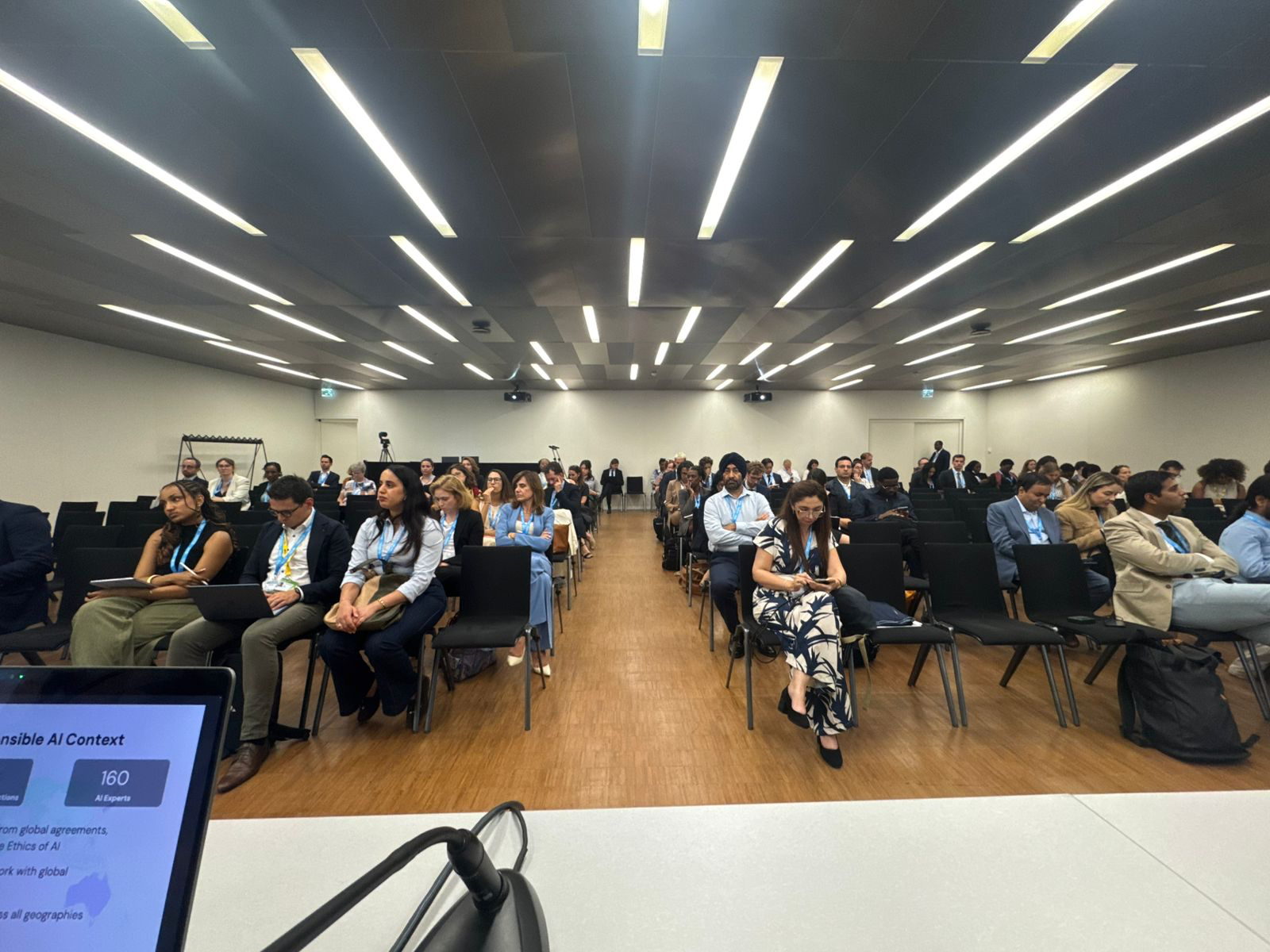
Why it matters for the Euro-Mediterranean region: The session brings the Geneva discussion closer to implementation: local-government readiness, civic culture, public-interest prototypes, and responsible AI evidence that can be used by institutions outside major AI-producing economies.
11:10 CEST, 6 July - Multilingual AI inclusion appears in the side-event agenda
Source: UN side-events list
The side-event programme includes “Multilingualism and AI: Can Open Models Be the Solution?”, organised by the UN Foundation, and other sessions connected to cultural knowledge infrastructure and AI-in-education policy readiness.
Why it matters for the Euro-Mediterranean region: Arabic, Amazigh/Tamazight, Mediterranean minority languages, and cross-border cultural archives should be part of AI governance, not afterthoughts. The practical test is whether open models, data ecosystems, and evaluation tools include non-English communities.
Live Updates
16:21 CEST, 12 July - Egypt MCIT publishes WSIS Chair’s Summary follow-through; UN closing record still unchanged
Source: Egypt MCIT WSIS Chair’s Summary item, Egypt MCIT Geneva meetings with Rwanda, Sudan, UN, ICANN and TikTok, Egypt MCIT Geneva meetings with Estonia, Nigeria, AU and Smart Africa, Egypt MCIT press-release and latest-news index, UN Web TV Day 2 closing sessions, UN News artificial-intelligence tag, and ITU press releases, media advisories and statements
Summary: The new substantive official item this hour is Egypt MCIT’s 11 July report on Raafat Hendy’s WSIS Forum 2026 Chair’s Summary in Geneva. MCIT says the summary stressed implementation, digital inclusion, affordable access, skills, meaningful and safe use of technology, human-centered and responsible AI, roadmaps and measurable indicators for WSIS mandates, and reporting to the UN Commission on Science and Technology for Development in 2027. The same MCIT follow-through trail adds that Egypt discussed AI governance cooperation with ODET, including capacity-building, interoperability, flexible governance frameworks, regulatory sandboxes, technical reviews of AI systems, and the Egyptian Center for Responsible AI; separately, MCIT reports AI cooperation discussions with Estonia, Nigeria, the African Union, Smart Africa, Rwanda and Sudan. UN Web TV’s Day 2 closing-session page still shows the same visible video metadata checked earlier, and UN News/ITU indexes did not surface a newer Global Dialogue closing summary, transcript, negotiated outcome, Resource Hub implementation page, or Euro-Mediterranean government/permanent-mission statement from the Dialogue itself.
Confirmed fact: This is Egypt MCIT/WSIS/Geneva Digital Week follow-through. It should not be read as a UN Global Dialogue closing outcome or as a closing-plenary country statement.
Euro-Med relevance: Egypt is now the most visible Southern Mediterranean implementation case in the post-Geneva source trail: WSIS chair summary language, ECRAI, sandboxes, responsible-AI guidance, online safety, interoperability and measurable indicators give EuroMedAI concrete institutional mechanisms to track.
Media: Official Egypt MCIT, UN Web TV, UN News and ITU links only; no media file embedded or downloaded.
12:28 CEST, 12 July - Geneva Digital Week closeout adds AI Lab, skills and infrastructure follow-through; UN closing record still unchanged
Source: ITU Geneva Digital Week closing release, AI for Good Lab ITU News item, AI for Good 2026 ITU key takeaways, ITU submarine-cable resilience release, UN Web TV Day 2 closing sessions, UN News artificial-intelligence tag, and UN press and meetings site
Summary: The 12 July check found a new official implementation package in ITU’s 10 July Geneva Digital Week closeout and related ITU News items. ITU says Geneva Digital Week closed with more than 12,000 participants from 177 countries and links the UN Global Dialogue to AI for Good, WSIS Forum, the AI for Good Global Commission, the Focus Group on Agentic AI, AI Skills Coalition partners, Partner2Connect, WSIS Prizes and submarine-cable resilience. The ITU AI for Good Lab item adds a concrete capacity-building track for developing and emerging economies: readiness and policy support, skills development, public AI infrastructure, local datasets, compute resources, open-source toolkits and open-weight models. ITU’s standards director separately highlights the data-centre divide, including the finding that only 32 countries have AI-specialized data centres and that developing countries other than China host less than 10 percent of global data-centre capacity. UN Web TV’s Day 2 closing-session page remains the official video record with the same visible metadata; the UN Global Dialogue resources page still returned a CloudFront 403 to command-line fetch; UN News and UN press did not surface a newer public closing summary, transcript, negotiated outcome, Resource Hub implementation page, or Euro-Mediterranean government/permanent-mission statement in the checked source trail.
Confirmed fact: This is ITU/Geneva Digital Week and AI for Good/WSIS follow-through. It should not be read as a UN Global Dialogue closing outcome or country statement.
Euro-Med relevance: Mediterranean AI-readiness work now has a sharper implementation checklist: policy support, skills, public AI infrastructure, standards, local datasets, compute and resilient connectivity. Those are the areas where EuroMedAI should look for partnerships and measurable follow-up before the New York 2027 Dialogue session.
Media: Official ITU, AI for Good, UN Web TV, UN News and UN press links only; no media file embedded or downloaded.
14:30 CEST, 10 July - Egypt MCIT adds UNDP AI-sandbox follow-through; UN/ITU public records show no newer closing outcome
Source: Egypt MCIT: ICT Minister Talks Cooperation with Kenya, World Bank Officials, Witnesses LOI Signing with UNDP, Egypt MCIT press-release index, ITU press releases, media advisories and statements, UN Global Dialogue homepage, UN Web TV Day 2 closing sessions, and UN press and meetings site
Summary: The 10 July source check found one new Euro-Mediterranean implementation item not yet reflected in the article: Egypt MCIT’s 9 July release on Geneva-side meetings with Kenya, UNDP and the World Bank. MCIT says Egypt and UNDP signed a Letter of Intent to strengthen national responsible-AI governance capacity, including exploration of an Egypt-tailored AI sandbox, pre-deployment testing and evaluation of AI systems, alignment with responsible-AI principles, regulatory requirements and the public interest, and support for operational auditing and evaluation mechanisms. MCIT also reports World Bank talks on digital transformation, MSMEs, GovTech, responsible AI and digital skills. The ITU press-release index still shows the 9 July agentic-AI trust/identity standards release as the latest relevant ITU item; the UN homepage still frames the Dialogue as a Geneva 2026 to New York May 2027 process; no public co-chair closing summary, negotiated outcome, transcript, speaker-by-speaker statement list, Resource Hub implementation page, or new Euro-Med government/permanent-mission statement from the UN Dialogue itself was found in the checked official sources.
Confirmed fact: This is Egypt MCIT/UNDP/World Bank Geneva Digital Week follow-through, not a Global Dialogue outcome or a closing-plenary country statement.
Euro-Med relevance: Egypt’s AI-sandbox and audit-capacity track is directly relevant to Mediterranean public-sector readiness: it translates responsible-AI language into institutional tools for testing, evaluation, regulatory learning and safe deployment.
Media: Official Egypt MCIT, UNDP, ITU, UN Global Dialogue, UN Web TV and UN press links only; no media file embedded or downloaded.
16:31 CEST, 9 July - ITU adds agentic-AI standards work to the Geneva implementation trail
Source: ITU press release: ITU launches global standards initiative to build trust in AI behaviour and identity, ITU Focus Group on Trust and Identity for Humans and Agentic AI, ITU Media Centre, UN News artificial-intelligence tag, UN press and meetings site, and UN Web TV Day 2 closing sessions
Summary: The late-afternoon official-source check found a new ITU standards item above WSIS Prizes in the ITU Media Centre. ITU says the Focus Group on Trust and Identity for Humans and Agentic AI was announced at AI for Good and will work on trusted digital identity, accountable agent behaviour, meaningful human control, reference architectures, lifecycle assurance models, interoperability mechanisms for digital identity and credentials, security criteria and benchmarks, and a standardisation roadmap. ITU says the group reports to ITU-T Study Group 17 and will meet first in Paris in November 2026, then Geneva in January 2027. UN News’ AI tag still surfaced the child-rights coalition and accountability stories as the latest substantive Global Dialogue items in the checked page text; UN press/meetings still surfaced the Secretary-General’s opening remarks as the relevant Global Dialogue press item; the UN Web TV closing page still did not expose a public transcript, speaker-by-speaker statement list, co-chair summary, negotiated outcome, Resource Hub implementation page, or new Euro-Mediterranean government/permanent-mission statement.
Confirmed fact: This is ITU/AI for Good standards follow-through, not a Global Dialogue outcome or country statement.
Euro-Med relevance: Agentic AI turns trust into infrastructure: who or what is acting, under whose authority, with what credentials, and with what safeguards. Mediterranean governments and institutions should track this standards process because it may shape procurement, identity systems, cross-border public services, critical-infrastructure controls and liability frameworks.
Media: Official ITU, UN News, UN press and UN Web TV links only; no media file embedded or downloaded.
15:54 CEST, 9 July - Egypt MCIT confirms WSIS Forum chair role and Geneva Digital Week AI cooperation talks
Source: Egypt MCIT: ICT Minister Chairs WSIS Forum 2026 in Geneva, Egypt MCIT: ICT Minister Meets Officials from Iraq, Cambodia, European Commission at Geneva Digital Week to Discuss Cooperation, WSIS Forum 2026, ITU Media Centre, AI for Good Global Summit 2026, and UN Web TV Day 2 closing sessions
Summary: The afternoon source check found a stronger Euro-Mediterranean implementation signal in Egypt’s official MCIT releases. MCIT says Egypt has assumed the chairmanship of WSIS Forum 2026 in Geneva, with ICT Minister Raafat Hendy leading high-level sessions and ministerial tracks, coordinating proceedings with ITU, and presenting the Chair’s Summary at the closing session. MCIT also reports Geneva Digital Week meetings with Iraq, Cambodia and the European Commission; the European Commission meeting with DG CONNECT’s Roberto Viola covered AI, quantum computing, digital transformation, personal data protection, international digital infrastructure, research and innovation, AI capacity-building for SMEs, responsible AI use, and ongoing Egypt-EU cooperation. The official UN Web TV closing-session page still did not expose a public transcript, speaker-by-speaker statement list, co-chair summary, negotiated outcome, Resource Hub implementation page, or new Euro-Mediterranean government/permanent-mission statement from the UN Dialogue itself.
Confirmed fact: This is Egypt MCIT/WSIS/Geneva Digital Week follow-through. It should not be read as a UN Global Dialogue closing outcome or as a new country statement from the Dialogue’s closing plenary.
Euro-Med relevance: Egypt’s WSIS chair role and Egypt-EU AI/digital cooperation talks connect the post-Dialogue implementation agenda to Southern Mediterranean capacity-building, responsible AI adoption, SME support, data governance and digital public infrastructure.
Media: Official Egypt MCIT, WSIS Forum, ITU, AI for Good and UN Web TV links only; no media file embedded or downloaded.
11:37 CEST, 9 July - Official ITU listing adds WSIS Prizes; UN closing record remains unchanged
Source: ITU press release: WSIS Prizes honour top tech solutions for digital development, ITU Media Centre, UN Global Dialogue documents and resources, UN Web TV Day 2 closing sessions, UN News artificial-intelligence tag, and UN press and meetings site
Summary: The late-morning official-source check found one newer ITU/WSIS follow-through item: ITU’s 9 July WSIS Prizes release, listed as the newest visible item in the ITU Media Centre and categorised under Digital inclusion and Broadband/Connectivity. The UN Global Dialogue resources page was reachable and still showed the opening press release in six UN languages, co-chair letters, Statements & Remarks links, the roadmap, themes-and-structure note, media advisory and background resources, but no public co-chair closing summary, negotiated outcome, transcript, speaker-by-speaker statement list, AI Resource Hub implementation page, or Euro-Mediterranean government/permanent-mission statement. UN Web TV still shows the Day 2 closing session as the official video record with the same visible metadata previously logged.
Confirmed fact: The WSIS Prizes item is official ITU/WSIS Forum digital-development follow-through. It is not a Global Dialogue outcome, not a national AI commitment, and not a Mediterranean country statement.
Euro-Med relevance: This keeps the post-Geneva implementation focus on practical digital capacity. Mediterranean institutions should watch WSIS stocktaking, prize and forum channels for public-interest projects that can be adapted to local readiness, connectivity, skills, language inclusion and responsible AI deployment.
Media: Official ITU, WSIS, UN Global Dialogue resources, UN Web TV, UN News and UN press links only; no media file embedded or downloaded.
07:15 CEST, 9 July - Morning source check adds ITU connectivity follow-through, but no closing outcome
Source: ITU press release: Partner2Connect surpasses USD 100 billion in commitments, ITU Media Centre, WSIS Forum 2026, UN Web TV Day 2 closing sessions, UN News artificial-intelligence tag, and UN press and meetings site search
Summary: The 9 July morning check found one new relevant follow-through item for the EuroMedAI source trail: ITU’s 8 July Partner2Connect milestone, listed by ITU as surpassing USD 100 billion in commitments for universal meaningful connectivity at WSIS Forum 2026. This extends the post-Dialogue implementation picture from AI for Good into digital foundations: connectivity, public digital infrastructure, skills, cybersecurity, multilingual ecosystems and digital divides. UN Web TV’s Day 2 closing-session page remains the official video record with the same visible metadata checked previously. UN News and UN press/meetings pages did not expose a newer public Global Dialogue closing summary, transcript, speaker-by-speaker statement list, negotiated outcome, Resource Hub implementation page, or new Euro-Mediterranean government/permanent-mission statement in the accessible sources reviewed.
Confirmed fact: The ITU Partner2Connect item is official WSIS/Geneva Digital Week follow-through. It should not be read as a UN Global Dialogue outcome or as a country-specific AI governance commitment.
Euro-Med relevance: The update matters because the AI divide is partly a connectivity and digital-public-infrastructure divide. Mediterranean follow-up should track whether global digital-inclusion pledges become practical access, skills and public-sector readiness support for Southern and Eastern Mediterranean institutions.
Media: Official ITU, WSIS, UN Web TV, UN News and UN press/search links only; no media file embedded or downloaded.
17:34 CEST, 8 July - UN News and UN Web TV checks keep the post-closing record unchanged
Source: UN News artificial-intelligence tag, UN Web TV Day 2 closing sessions, ITU Media Centre, UN press and meetings site search, UN Global Dialogue documents and resources, and AI for Good Global Summit 2026
Summary: The 17:34 CEST official-source check found no newer substantive Global Dialogue item on the UN News AI index after the child-rights coalition and accountability stories already logged above. UN Web TV still exposes the Day 2 closing-session page as a video asset with the same og:updated_time of 2026-07-08T05:22:01-04:00, 03:38:57 duration, UNOG broadcaster, six UN-language audio tracks plus Original, and the high-level governmental plenary, Dialogue of Dialogues and closing-ceremony programme text. No public transcript, speaker-by-speaker statement list, co-chair summary, negotiated outcome, Resource Hub implementation page, or new Euro-Mediterranean government/permanent-mission statement was found in the accessible official sources reviewed. ITU’s visible media-centre listing still shows the 8 July Geneva Digital Week item as the latest relevant follow-through item.
Confirmed fact: This is a source-status update. It does not add a national policy position, closing declaration, co-chair summary, Resource Hub commitment or Mediterranean implementation pledge.
Euro-Med relevance: The verification threshold remains unchanged: France, Italy, Morocco and Spain can be cited for the UN News-reported child-rights coalition signatory list; Morocco can be cited for the UN News-reported accountability intervention; other country-level positions should still wait for official transcripts, government or mission releases, UN summaries, or chaptered Web TV review.
Media: Official UN News, UN Web TV, ITU, UN press/search, UN resources and AI for Good links only; no media file embedded or downloaded.
16:20 CEST, 8 July - Official indexes still show no post-closing outcome or country-statement release
Source: UN Web TV Day 2 closing sessions, UN press releases, UN Meetings Coverage, UN Global Dialogue documents and resources, ITU Media Centre, and UNESCO newsroom
Summary: The 16:20 CEST official-source check found no public post-closing co-chair summary, negotiated outcome, transcript, speaker-by-speaker statement list, Resource Hub implementation page, or new Euro-Mediterranean government or permanent-mission statement in the accessible sources reviewed. UN Web TV still provides the official Day 2 closing-session video metadata, including the “Reflections, Convergences and the Way Forward” description, 7 July production date, UNOG broadcaster and multilingual audio links. The UN press index still surfaces the Secretary-General’s 6 July opening remarks as the relevant Global Dialogue press item; the Meetings Coverage index did not expose a new Global Dialogue closing story in the page text checked. ITU’s media centre continues to list the 8 July Geneva Digital Week follow-through release as the latest relevant implementation item.
Confirmed fact: This is a source-status update. It does not add a national policy position, closing declaration, co-chair summary or Mediterranean commitment.
Euro-Med relevance: EuroMedAI should continue to cite France, Italy, Morocco and Spain only for the UN News-reported child-rights coalition signatory list, Morocco for the UN News-reported accountability intervention, and other Mediterranean actors for confirmed agenda roles unless official statements, transcripts or mission/government releases appear.
Media: Official UN Web TV, UN press, UN Meetings Coverage, UN resources, ITU and UNESCO links only; no media file embedded or downloaded.
14:23 CEST, 8 July - Afternoon check: UN News and UN press indexes still point to earlier official items
Source: UN News artificial-intelligence tag, UN Web TV Day 2 closing sessions, UN press releases, and UN Meetings Coverage
Summary: The afternoon check found no newer official UN News item on the Global Dialogue after the two 7 July stories already logged above: the child-rights AI coalition and the Day 2 accountability debate. UN Web TV’s closing-session page remains the official video record and now exposes an og:updated_time of 2026-07-08T05:22:01-04:00, while the visible page text still describes the high-level governmental segment, Dialogue of Dialogues and closing ceremony without a public transcript or speaker-by-speaker statement list. The UN press-release index still surfaces the Secretary-General’s 6 July opening remarks as the relevant Global Dialogue press item; the UN Meetings Coverage index did not surface a new Global Dialogue closing story in the page text checked.
Confirmed fact: This is a source-status update. It does not add a national policy position, co-chair summary, closing declaration, or Mediterranean commitment.
Euro-Med relevance: The practical editorial position remains unchanged: Mediterranean participation, speaker roles and UN News-reported interventions can be cited, but country-level closing positions should wait for official transcripts, government or permanent-mission releases, UN summaries, or verified Web TV review.
Media: Official UN News, UN Web TV, UN press and UN Meetings Coverage links only; no media file embedded or downloaded.
13:23 CEST, 8 July - Midday official-source check: no closing summary or new Euro-Med country statement yet
Source: UN Global Dialogue documents and resources, UN Web TV Day 2 closing sessions, UN News artificial-intelligence tag, UN press releases, and UN Meetings Coverage
Summary: A midday check of official UN channels found no new public co-chair closing summary, negotiated outcome, transcript, speaker-by-speaker statement list, or Euro-Mediterranean government statement beyond the UN News and ITU items already logged above. The UN Global Dialogue resources page currently lists the 6 July opening press release in the six UN languages, co-chair letters through 8 June 2026, a Statements & Remarks section with the Secretary-General’s opening remarks, the high-level roadmap, the themes-and-structure note, the media advisory, and background links including the Scientific Panel, Global Digital Compact and Pact for the Future. UN Web TV remains the official closing-session video page, with the Day 2 programme description and language metadata visible, but no public transcript exposed in the page text checked.
Confirmed fact: This is a source-status update. It confirms what the reviewed official pages show and what they do not yet show; it does not add a country position or Dialogue outcome.
Euro-Med relevance: The absence of a public closing summary means Mediterranean country participation should still be treated as participation unless backed by an official statement, transcript, mission release, government release, or UN summary.
Media: Official UN resources, UN Web TV, UN News, UN press and UN Meetings Coverage links only; no media file embedded or downloaded.
11:06 CEST, 8 July - ITU opens the next Geneva implementation track: AI for Good and WSIS Forum
Source: ITU press release: From principles to practice, AI for Good Global Summit 2026, WSIS Forum 2026, and UN Web TV Day 2 closing sessions
Summary: ITU’s 8 July release says the AI for Good Global Summit and WSIS Forum 2026 are opening in Geneva and will build on the UN’s AI Dialogue by moving from principles toward practice. It identifies AI for Good as the UN platform for real-world AI solutions, says Scientific Panel members will continue the preliminary-report discussion through AI for Good keynote and working-group sessions, and says the first AI for Good Global Commission meeting will look at pathways to strengthen trust, expand access, and unlock practical AI benefits. The same release frames WSIS Forum 2026 as the UN’s long-running multistakeholder digital-development platform, with its mandate extended to 2035. UN Web TV remains the official source for the Dialogue’s Day 2 closing-session video record; no new transcript, speaker-by-speaker statement list, co-chair summary, negotiated outcome, or Euro-Mediterranean country commitment was visible in the checked sources.
Confirmed fact: This is an official ITU follow-through update for Geneva Digital Week. It is not a Global Dialogue closing declaration and does not attribute any new national position.
Euro-Med relevance: For Mediterranean actors, the handoff from the Dialogue to AI for Good and WSIS Forum matters if it produces practical channels for capacity-building, trust infrastructure, access, public-interest AI deployment, multilingual inclusion, and local digital-development implementation.
Media: Official ITU, AI for Good, WSIS Forum, and UN Web TV links only; no media file embedded or downloaded.
10:33 CEST, 8 July - Child-rights AI coalition launches with France, Italy, Morocco, and Spain among signatories
Source: UN News: New coalition puts children’s rights at the centre of the AI age
Summary: UN News reports that the Coalition for Children’s Rights and Protection in the Age of Artificial Intelligence launched in Geneva during the Global Dialogue. Founding UN members named in the article are DGC, OHCHR, ITU, ODET, UNICEF, and UNESCO. UN News says 17 countries have signed on so far: Austria, Brazil, Bulgaria, Canada, Czech Republic, El Salvador, Estonia, France, Indonesia, Italy, Japan, Kenya, Luxembourg, Morocco, the Netherlands, Republic of Korea, and Spain. The article links the coalition to the Convention on the Rights of the Child and says members will share evidence and good practice while bringing children’s views into decisions about AI systems that affect their lives.
Euro-Med relevance: Four Euro-Mediterranean countries in EuroMedAI’s watchlist - France, Italy, Morocco, and Spain - are listed as signatories. This gives the region a concrete child-rights and AI-safety cooperation thread to follow after Geneva.
Media: Official UN News article only; no image or video file embedded or downloaded.
10:28 CEST, 8 July - UN News accountability article adds a named Morocco signal from Day 2
Source: UN News: When AI hurts people, who’s to blame? Global experts grapple with accountability
Summary: UN News reports that Day 2 of the Global Dialogue focused on accountability for AI-related harm, human-rights risks, environmental impacts from data centres, inequality risks for the Global South, and AI-assisted online violence. The article attributes a Morocco intervention to Amal El Fallah Seghrouchni, who argued that governance needs to open AI “black boxes” and understand complex model behaviour. It also reports remarks from Volker Türk, Sasha Luccioni, Jhalak Kakkar, and Sima Bahous on trust, local environmental impacts, Global South inequality, and gendered online abuse.
Euro-Med relevance: This is a confirmed, named Moroccan contribution to the accountability debate. It matters for Mediterranean AI governance because explainability, auditability, model evaluation, and institutional capacity are prerequisites for enforceable public-sector oversight.
Media: Official UN News article only; no image or video file embedded or downloaded.
08:23 CEST, 8 July - UNHCR links AI-driven hate speech to refugee and humanitarian safety risks
Source: UN News Today 07 July 2026
Summary: The UN News Today audio transcript reports that UNHCR used the AI for Good Summit in Geneva to warn that misinformation, hate speech and deepfakes online are creating real-world harm for refugees and aid workers, with AI making the problem worse. UNHCR’s item says 93 percent of surveyed staff had witnessed misinformation, disinformation or hate speech affecting their work, and cites Libya as an example where violent hate speech and disinformation led to abuse of refugees and threatened humanitarian staff safety, including deepfakes of UNHCR personnel and online calls to share staff home addresses.
Confirmed fact: This is a UN News audio/transcript item linked to the AI for Good Summit in Geneva, not a Global Dialogue closing declaration or national commitment.
Euro-Med relevance: The Libya example makes information integrity, refugee protection and humanitarian staff safety part of the Mediterranean AI-governance agenda. It also reinforces the need for migration, displacement and civil-society perspectives in any post-Geneva follow-up on AI safety and platform accountability.
Media: Official UN News audio page only; no audio file embedded or downloaded.
06:55 CEST, 8 July - Overnight check keeps the closing video as the official record; no transcript or outcome yet
Source: UN Web TV Day 2 closing sessions, UN News artificial-intelligence tag, UN Meetings Coverage, and UN press releases
Summary: UN Web TV remains the official source for the Day 2 closing block. The visible page continues to identify the session as “Closing Sessions - Global Dialogue on Artificial Intelligence Governance - Day 2”, with UNOG as broadcaster, an artificial-intelligence subject tag, and the same three-part programme: high-level governmental statements, the Dialogue of Dialogues, and the closing ceremony. At this overnight check, the page still did not show a public transcript, speaker-by-speaker statement list, co-chair summary, negotiated outcome, or country commitment. UN News, UN Meetings Coverage, and UN press-release indexes likewise did not surface a new post-closing Global Dialogue outcome item in the accessible page text checked this hour.
Confirmed fact: This is a source-status update, not a substantive policy outcome. It confirms where the official video record is currently available and what was not yet visible in the reviewed official channels.
Euro-Med relevance: EuroMedAI will continue to treat Mediterranean participation and agenda roles separately from policy positions. Any country-level claim from the closing plenary should wait for official video review, a transcript, a permanent-mission release, a government statement, or a UN summary.
Media: Official UN Web TV page only; no media file embedded or downloaded.
21:45 CEST - Closing-session video metadata is live; UN News frames the Secretary-General’s guardrails agenda
Source: UN Web TV Day 2 closing sessions, UN News: From AI to “killer robots”: UN chief issues urgent governance call, and UN News artificial-intelligence tag
Summary: UN Web TV now exposes the Day 2 closing-session page as a video asset, with updated metadata and the same official programme description for the 15:00-18:30 CEST closing block: high-level governmental statements, the Dialogue of Dialogues, and the closing ceremony. The visible page still does not provide an official transcript, speaker-by-speaker statement list, co-chair summary, negotiated outcome, or Euro-Mediterranean country commitment. Separately, UN News’ opening-day story records the Secretary-General’s governance agenda: child-safety safeguards, human rights and human responsibility in high-stakes AI decisions, public AI capacity for developing countries, and disclosure of AI systems’ carbon, water, and land footprint.
Confirmed fact: The Web TV asset is the official media control point for reviewing the closing block, while the UN News story is official UN editorial coverage of the Secretary-General’s opening message. Neither source is a country statement, closing declaration, or Mediterranean national commitment.
Euro-Med relevance: The recording metadata matters because Mediterranean statements should now be checked against the official video before any national position is attributed. The Secretary-General’s themes also map directly onto Mediterranean implementation questions: child protection, public-sector accountability, capacity-building, and sustainable compute infrastructure.
Media: Official UN Web TV video asset and UN News article link only; no media file embedded or downloaded.
16:00 CEST - UN Web TV closing asset refreshes during the high-level plenary; UN News adds an environmental-governance lens
Source: UN Web TV Day 2 closing sessions and UN News interview with Kaveh Madani
Summary: The UN Web TV closing-session page remains the official source for the 15:00-18:30 CEST closing block and its metadata was refreshed during the high-level plenary window. The page still describes the 15:00-16:30 governmental segment, 16:30-18:00 Dialogue of Dialogues, and 18:00-18:30 closing ceremony. Separately, UN News published a Geneva-linked interview with Kaveh Madani, Director of the UN University Institute for Water, Environment and Health, saying responsible AI management requires action from governments, technology companies, and users, with attention to AI’s environmental footprint and whether benefits outweigh costs. At this check, accessible official sources still had not published a transcript, statement list, co-chair summary, closing outcome, or new Euro-Mediterranean national commitment.
Euro-Med relevance: This is not a Mediterranean country statement. It is relevant because environmental and infrastructure costs are part of AI-governance capacity: energy, water, compute, and procurement choices will shape whether Mediterranean public institutions can adopt AI responsibly.
Media: Official UN Web TV page and UN News audio link only; no media file embedded or downloaded.
14:59 CEST - High-level statement window is the next official control point
Source: UN Web TV Day 2 closing sessions, UN Global Dialogue official homepage, and UNESCO opening release
Summary: The official UN Web TV asset remains the primary source to watch as the Dialogue moves into its 15:00-16:30 CEST high-level governmental plenary segment, followed by the 16:30-18:00 CEST Dialogue of Dialogues and 18:00-18:30 CEST closing ceremony. The page describes the high-level segment as the window for heads of delegation and senior Member State representatives to share national and regional AI-governance perspectives. At this check, accessible official sources had not yet published a transcript, co-chair summary, statement list, closing outcome, or new Euro-Mediterranean national commitment.
Euro-Med relevance: The statement window is where Mediterranean country positions may become attributable, but EuroMedAI will continue to separate verified participation from policy claims until official transcripts, government releases, permanent-mission statements, or UN summaries are available.
Media: Official UN Web TV link only; no video file embedded or downloaded.
13:59 CEST - Closing-session page confirms the official statement window, but no transcript yet
Source: UN Web TV Day 2 closing sessions
Summary: UN Web TV’s closing-session page confirms the 15:00-16:30 CEST high-level governmental plenary as the formal window for statements by heads of delegation and other senior Member State representatives. The same page describes the 16:30-18:00 CEST Dialogue of Dialogues as a moderated exchange to reflect on key messages and practical perspectives from the thematic discussions, followed by the 18:00-18:30 CEST closing ceremony. At this check, no official transcript, co-chair summary, negotiated outcome, or Euro-Mediterranean country statement was available from the sources reviewed.
Euro-Med relevance: This identifies where any confirmed national or regional policy signals should appear first. EuroMedAI will wait for official recordings, transcripts, mission statements, or government releases before attributing specific positions to Mediterranean delegations.
Media: Official UN Web TV link only; no video file embedded or downloaded.
13:21 CEST - Follow-up architecture now matters as much as closing language
Source: UN Global Dialogue official homepage, UNESCO opening release, UN Web TV Day 2 closing sessions
Summary: The UN’s public homepage confirms the first Dialogue in Geneva is not a one-off: a second session is planned for New York in May 2027. UNESCO’s release identifies ITU, UNESCO, ODET and EOSG as the joint secretariat for the process. UN Web TV remains the official media link for the Day 2 high-level plenary, Dialogue of Dialogues and closing ceremony.
Euro-Med relevance: The follow-up track gives Mediterranean governments, EU institutions, civil-society groups and research networks time to convert Geneva messages into concrete capacity-building, interoperability, rights and multilingual-inclusion proposals.
Media: Official UN Web TV link only; no video file embedded or downloaded.
10:32 CEST - Day 2 annotated agenda adds named Euro-Med speakers and institutional launch details
Source: Annotated agenda PDF, UN programme page
Summary: The annotated agenda confirms named roles for Spain, Morocco, France, Egypt and the European Commission in Day 2 sessions. It also names ITU, UNESCO and UNDP representatives in the UN AI Resource Hub: Capacity Building and Fellowship Activities launch segment.
Euro-Med relevance: This is the strongest official update this hour because it places Mediterranean and EU actors inside the Dialogue’s capacity-building, rights and interoperability tracks.
Media: The Day 2 closing block is available on UN Web TV.
10:29 CEST - UN Web TV closing-session asset is active with “Dialogue of Dialogues” details
Source: Closing Sessions - Global Dialogue on Artificial Intelligence Governance - Day 2, Day 2 safe-AI session, Day 2 human-rights session
Summary: UN Web TV now has the Day 2 closing-session asset for the 15:00-18:30 block, including the high-level governmental plenary, Dialogue of Dialogues - Reflections, Complementarities and the Way Forward, and closing ceremony. The same schedule also carries the Day 2 safe-AI and human-rights thematic discussion assets, all listed under UNOG.
Euro-Med relevance: The closing block is the most likely place to watch for co-chair summaries, convergence language, follow-up references, and any public statements from Euro-Mediterranean delegations.
Media: Official UN Web TV links only; no video files embedded or downloaded.
What EuroMedAI Is Watching
- Capacity-building and fellowship opportunities linked to the UN AI Resource Hub.
- Concrete country statements from Euro-Mediterranean delegations.
- Follow-up from the scientific panel’s preliminary report.
- Commitments on compute, data, skills, multilingual inclusion, and public-sector AI readiness.
- Regional cooperation proposals involving Mediterranean governments, EU institutions, the Union for the Mediterranean, UN agencies, civil society, and research networks.
- Co-chair summaries, closing-session language, and any official transcripts from the Dialogue of Dialogues.
- Follow-up on the child-rights AI coalition, especially whether signatory countries publish implementation steps or national contact points.
- AI-driven misinformation, hate speech and deepfakes affecting refugees, migrants, humanitarian staff and civil-society actors in Mediterranean contexts.
- WSIS Forum 2026 chair summary and ministerial-track follow-through, including Egypt’s role as Forum chair.
- Agentic-AI standards work on identity, trustworthiness, lifecycle assurance, interoperability, security benchmarks and human control.
- Egypt-UNDP responsible-AI governance cooperation, especially whether the proposed AI sandbox leads to public testing criteria, audit methods, institutional guidance or open learning for other Mediterranean administrations.
- AI for Good Lab and related public AI infrastructure support, especially whether Mediterranean governments, universities or civil-society actors can access readiness assessments, skills support, local dataset work, compute resources, open-source toolkits or open-weight models.
- Digital-infrastructure resilience after the ITU submarine-cable report, including Mediterranean landing points, redundancy, permitting, climate risk and cable-repair capacity.
- Egypt’s WSIS Chair’s Summary follow-through, especially measurable indicators, CSTD 2027 reporting, ECRAI technical reviews, regulatory sandboxes, responsible-AI guidance, online safety and ODET/UN cooperation.
Suggested X/Twitter Tags and Draft Posts
Suggested handles and tags: @alouanemed, @UNTechEnvoy, @UNWebTV, @UN_News_Centre, @UN_PGA, @UNUniversity, @UNICEF, @UNHumanRights, @UN_Women, @Refugees, @UNESCO, @ITU, @ITU_AIForGood, @OECD, @EU_Commission, #AIGovernance, #GlobalDialogueAI, #AIForGood, #EuroMediterranean, #AIDivide, #ChildRights, #ResponsibleAI, #WSIS, #DigitalInclusion
Draft post 1: Day 2 of the UN Global Dialogue puts rights, interoperability and capacity-building in the same frame. The annotated agenda confirms Euro-Med roles from Spain, Morocco, France, Egypt and the European Commission. EuroMedAI is tracking what becomes actionable for public institutions across the Mediterranean.
Draft post 2: The UN AI Resource Hub launch segment matters for the Mediterranean if it turns capacity-building into practical access: fellowships, implementation support, governance tooling and pathways for institutions outside frontier AI economies.
Draft post 3: Watching the Dialogue of Dialogues on UN Web TV for closing signals: co-chair summaries, convergence language, and follow-up between Geneva 2026 and New York 2027. The test is whether inclusive AI governance becomes measurable support for countries facing compute, data, skills and language gaps.
Draft post 4: The UN Global Dialogue is already a 2026-2027 process: Geneva now, New York in May 2027. Mediterranean actors should use the follow-up window to put practical AI capacity, multilingual inclusion and public-sector readiness on the agenda.
Draft post 5: The official UN Web TV closing-session page confirms the statement window for heads of delegation and the Dialogue of Dialogues. EuroMedAI will wait for official transcripts or mission releases before attributing country positions from Geneva.
Draft post 6: The Global Dialogue is entering its high-level statement and Dialogue of Dialogues window on UN Web TV. EuroMedAI is tracking official records for Mediterranean signals on capacity-building, rights, interoperability, multilingual inclusion and practical AI readiness.
Draft post 7: AI governance is also infrastructure governance. A UN News interview from Geneva points to AI’s environmental footprint and shared responsibility across governments, companies and users. For the Mediterranean, the practical questions include energy, water, compute access and responsible public procurement.
Draft post 8: The official UN Web TV closing-session asset is now the control point for checking country statements from Geneva. EuroMedAI will attribute Mediterranean policy positions only after they appear in official video, transcript, mission, or government sources.
Draft post 9: Overnight check: UN Web TV remains the official record for the Global Dialogue closing block, but no public transcript, statement list or closing outcome is visible yet. EuroMedAI is keeping country participation separate from attributable policy positions.
Draft post 10: UN News reports a new Coalition for Children’s Rights and Protection in the Age of AI, with France, Italy, Morocco and Spain among 17 signatory countries. For the Mediterranean, child safety, education and rights-by-design are now part of the post-Geneva follow-up agenda.
Draft post 11: Accountability was a core Day 2 theme at the UN Global Dialogue. UN News reports a Morocco intervention on opening AI “black boxes” - a practical issue for regulators, courts, researchers and public institutions across the Mediterranean.
Draft post 12: The UN Global Dialogue source trail is getting clearer: official documents now include the opening press release in six UN languages, co-chair letters, the roadmap and primary remarks links. Useful for Mediterranean policy work across Arabic, French, Spanish and English.
Draft post 13: Geneva AI week is moving from dialogue to implementation. ITU’s 8 July release says AI for Good and WSIS Forum are carrying the UN Dialogue into solution, trust, access and digital-development tracks. Mediterranean actors should watch the practical pathways, not just the plenary language.
Draft post 14: UN News Today reports UNHCR warnings from Geneva on AI-driven hate speech, misinformation and deepfakes affecting refugees and aid workers, including a Libya example. Mediterranean AI governance must include displacement, platform harm and humanitarian safety.
Draft post 15: Midday official-source check: UN Web TV remains the control point for the Global Dialogue closing record, and the UN resources page has not yet surfaced a public co-chair summary or transcript. EuroMedAI is keeping participation separate from attributable country positions.
Draft post 16: Afternoon source check: UN News, UN Web TV, UN press releases and Meetings Coverage still do not show a public closing summary or transcript for the Global Dialogue. EuroMedAI is tracking official sources before attributing Mediterranean country positions.
Draft post 17: The UN Web TV closing record now shows a 3:38:57 official video with six UN-language audio tracks plus Original. Useful for verification, but still not a transcript or closing declaration. EuroMedAI will keep country claims tied to official records.
Draft post 18: 16:20 CEST official-source check: UN Web TV, UN press, Meetings Coverage, ITU and UNESCO channels still do not show a public Global Dialogue closing summary, transcript or new Euro-Med country statement. Verified source trails remain the editorial baseline.
Draft post 19: 17:34 CEST check: UN News still points to the child-rights coalition and accountability stories as the latest substantive Global Dialogue items, while UN Web TV remains a video record without a public transcript. Country claims still need official records.
Draft post 20: ITU now lists a Partner2Connect milestone above USD 100B in connectivity commitments during WSIS Forum 2026. Not a Global Dialogue outcome, but highly relevant to the AI divide: Mediterranean AI readiness depends on connectivity, digital public infrastructure, skills and multilingual ecosystems.
Draft post 21: ITU’s 9 July WSIS Prizes release adds another post-Geneva implementation signal. Not a UN Global Dialogue outcome, but useful for the Mediterranean source trail: concrete digital-development projects are where AI readiness, connectivity and inclusion become practical.
Draft post 22: Egypt’s MCIT says Egypt is chairing WSIS Forum 2026 in Geneva, with ICT Minister Raafat Hendy leading high-level and ministerial tracks. For the Mediterranean, this puts a Southern Mediterranean government in a visible post-Dialogue implementation role.
Draft post 23: Egypt MCIT reports Geneva Digital Week talks with the European Commission on AI, data protection, digital infrastructure, SME adoption and responsible AI use. This is not a UN Global Dialogue outcome, but it is relevant follow-through for Euro-Mediterranean AI capacity.
Draft post 24: ITU has opened a standards track on trust and identity for humans and agentic AI. Not a UN Global Dialogue outcome, but a practical governance signal: Mediterranean institutions should watch identity, credentials, human control, security benchmarks and interoperability.
Draft post 25: Egypt MCIT reports a Geneva-side Letter of Intent with UNDP on responsible AI governance, including exploration of an Egypt-tailored AI sandbox. Not a UN Global Dialogue outcome, but a concrete implementation signal for public-sector AI readiness.
Draft post 26: Regulatory sandboxes, audit capacity and responsible-AI testing are where global governance becomes usable. Egypt’s MCIT-UNDP follow-through is worth watching for Mediterranean administrations building practical AI oversight.
Draft post 27: ITU’s Geneva Digital Week closeout points from dialogue to delivery: AI for Good, WSIS, the Global Commission, agentic-AI standards, skills, connectivity and infrastructure. For the Mediterranean, the test is practical access to capacity, compute, standards and public AI tools.
Draft post 28: The AI for Good Lab is one to watch for Mediterranean institutions. ITU describes support across AI readiness, skills and public AI infrastructure, including local datasets, compute resources, open-source toolkits and open-weight models.
Draft post 29: Egypt MCIT’s WSIS Chair’s Summary adds implementation language after Geneva week: responsible and human-centered AI, measurable indicators, digital inclusion, skills, trust and CSTD 2027 reporting. A concrete Southern Mediterranean follow-up track to watch.
Draft post 30: Egypt’s Geneva follow-through now includes ODET/UN discussions on AI governance, interoperability, regulatory sandboxes, technical reviews and ECRAI. This is where global AI governance becomes institutional practice.
Draft post 31: 17:35 Casablanca source check: UN News, UN Web TV, UN press, ITU, UNESCO and European Commission channels still do not show a newer Global Dialogue closing summary, transcript, Resource Hub page or Euro-Med country statement. EuroMedAI is keeping claims tied to official records.
Sources Checked This Hour
- UN News artificial-intelligence tag - rechecked at 17:35 Casablanca time. The latest visible Global Dialogue-specific items remain the child-rights coalition and accountability stories already used in this article; no newer UN News Global Dialogue story, closing summary or Euro-Med country statement was visible.
- UN News child-rights AI coalition article and UN News AI accountability article - retained as the latest substantive UN News Global Dialogue sources for Euro-Mediterranean signals.
- UN Web TV closing sessions - rechecked as the official Day 2 closing-session video page. Visible metadata still shows the 03:38:57 UNOG video, six UN-language audio tracks plus Original, and the same programme description; no public transcript, speaker-by-speaker statement list, co-chair summary, negotiated outcome, Resource Hub implementation page or Euro-Med country commitment was visible in the checked page text.
- UN press and meetings site - rechecked. The accessible homepage did not surface a new Global Dialogue closing summary, transcript, negotiated outcome or meetings-coverage story.
- UN Global Dialogue documents and resources - attempted again from command line; access was still blocked by CloudFront 403, so no new fact was added from that page.
- ITU press releases, media advisories and statements and ITU Media Centre - rechecked. The latest visible relevant ITU listing remains the 10 July Geneva Digital Week closeout, followed by the submarine-cable resilience report and the 9 July agentic-AI release.
- ITU: AI for Good and WSIS Forum 2026 close with global push for AI for everyone, AI for Good Lab, AI for Good 2026 key takeaways, and submarine-cable resilience report release - retained from the prior update; no newer ITU Global Dialogue follow-through item was found.
- Egypt MCIT: ICT Minister Presents Egypt WSIS Chairship Summary at Closing Ceremony, Egypt MCIT Geneva meetings with Rwanda, Sudan, UN, ICANN and TikTok, and Egypt MCIT Geneva meetings with Estonia, Nigeria, AU and Smart Africa - retained as the latest substantive Southern Mediterranean implementation trail already reflected in the top 12 July item. The MCIT latest-news index returned an internal-server-error page during this check, so no newer MCIT index item was attributed.
- UNESCO artificial-intelligence news and UNESCO opening release - rechecked for institutional follow-up; no newer accessible UNESCO Global Dialogue follow-up item was found in the checked trail.
- European Commission digital-strategy news - rechecked for EU follow-up. The visible latest relevant AI entries remain the 10 July Digital Services Act item, the 9 July EU-Australia digital-dialogue item, the 8 July NIS2 infringement item and the 7 July cybersecurity and AI Action Plan; no Global Dialogue-specific EU statement or Resource Hub item was visible.