Digital Humanism Opportunities: Fellowships, Summer Schools and Conferences
Digital Humanism is no longer one fellowship in Vienna. A guide to the fellowships, summer schools, conferences, lecture series and open-access publications that make up the field — and how researchers from the Mediterranean can get into them.
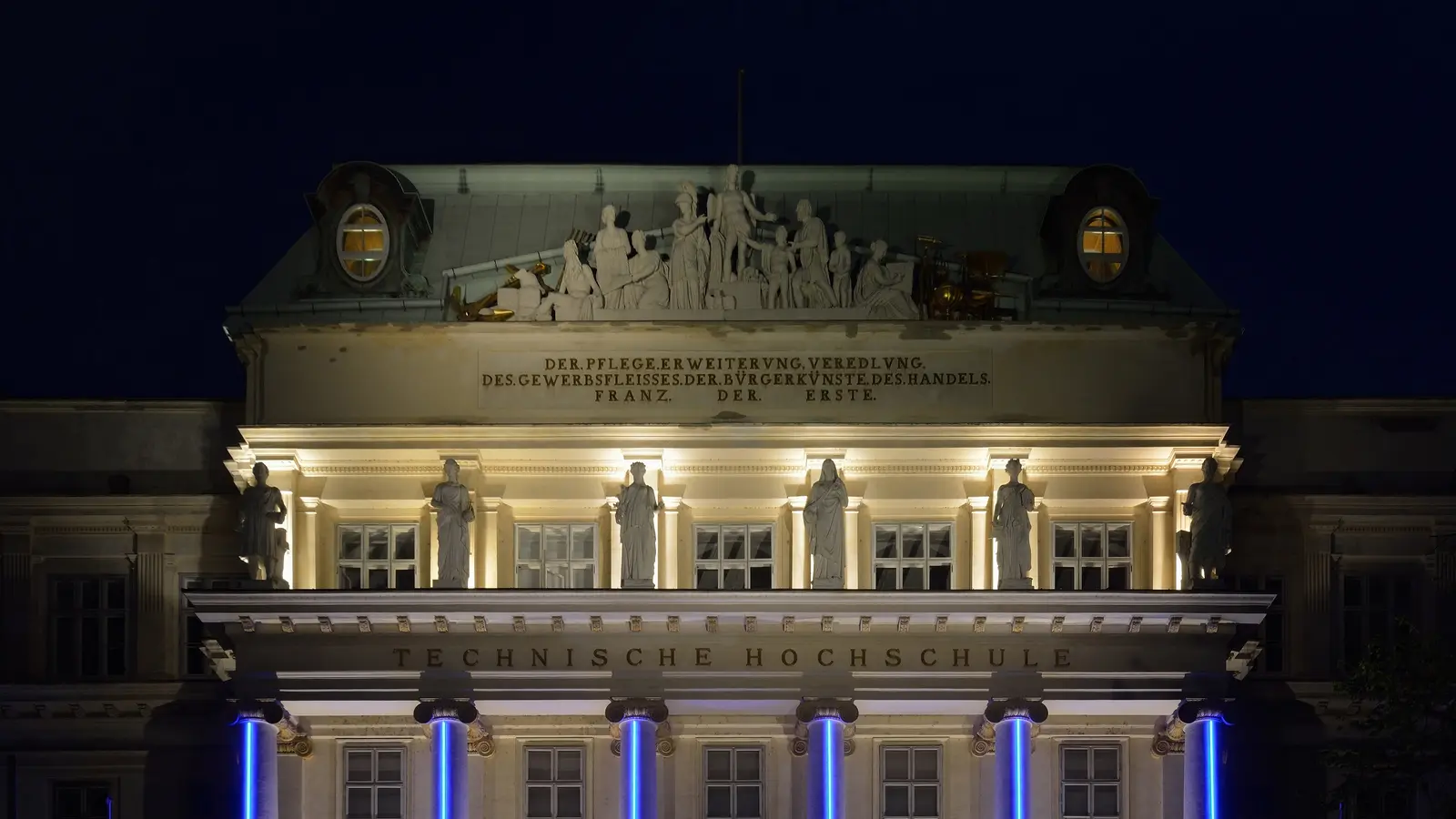
If you have heard of Digital Humanism at all, you have probably heard of one thing: the Digital Humanism Fellowship at the Institute for Human Sciences (IWM) in Vienna. It is the most visible opportunity in the field, and for a doctoral or early-postdoctoral researcher it is a genuinely good one.
It is also one door into a much larger building.
Since the Vienna Manifesto on Digital Humanism was published, the field has grown into an ecosystem with a UNESCO Chair, an annual research conference, summer schools on two continents, a free public lecture series, open-access books that have been downloaded more than a million times, and a fellowship program that has produced books rather than just residency reports. This guide maps the Digital Humanism opportunities that are actually open to researchers — including those based around the Mediterranean.
What Digital Humanism Is — and What It Is Not
Digital Humanism analyzes and seeks to influence the interplay between technology and humankind, so that technological development serves a better society and fully respects universal human rights. The Digital Humanism Initiative at TU Wien puts it simply: technology is for people, not the other way round.
Its 2027 conference call sets out two things the field rejects:
- “Digital animism” — attributing personhood, intentionality or moral capacity to digital systems. A model that convincingly simulates reasoning or empathy has not thereby acquired either.
- “Digital mechanism” — reducing human beings to computational systems. People are embodied, vulnerable and capable of moral reflection in ways that do not reduce to software processes.
One distinction causes more failed applications than any other:
| Digital Humanism | Digital Humanities | |
|---|---|---|
| Object of study | Technology’s effect on people, institutions and societies | Humanities questions — literature, history, art |
| Role of digital tools | The thing being examined | The method being used |
| Typical project | How algorithmic decision systems reshape courts or welfare offices | Text-mining a nineteenth-century newspaper corpus |
| Home disciplines | Computer science, philosophy, law, political science, sociology | Literary studies, history, linguistics, archaeology |
They sound alike and they are not the same field. IWM explicitly excludes projects that simply use digital tools to do humanities research. If you are applying to a Digital Humanism call, your project has to be about the human, social, political, economic or geopolitical dimensions of digitalization itself.
Fellowships
IWM Digital Humanism Fellowship, Vienna
The flagship. Three consecutive months in residence at the IWM in Vienna, a monthly stipend of €2,750 for doctoral candidates and €3,300 for postdoctoral fellows, office space and no teaching load. Open to all academic disciplines, with no geographic restriction.
We have written a full guide to eligibility, the application documents and what past fellows produced:
Full guide
Digital Humanism Fellowship 2026–2027: stipend, eligibility and how to apply
Read the fellowship guide
IWM ERC Mentoring Initiative
Less known, and useful at a different career stage. IWM, the Polish Academy of Sciences and the Polish Ministry of Science and Higher Education run a mentoring workshop for researchers preparing ERC Starting and Consolidator Grant applications in the humanities and social sciences. Mentors are scholars who have sat on ERC evaluation panels or held ERC grants themselves, and the workshop works through the academic design of your project rather than the administrative mechanics.
The workshop is free, held remotely, and conducted in English. One caveat matters: it is aimed specifically at researchers in Central, Eastern and South-Eastern Europe — the one program in this guide with a hard geographic restriction. Details and deadlines are on the IWM open calls page.
Summer Schools
Summer schools are the most underrated entry point in this field. They are short, they are often subsidized, and they put early-career researchers in the same room as the people who write the field’s books.
ACM Europe Digital Humanism Summer School, Vienna
Run in Vienna with ACM Europe, and now in its fifth edition. The program deliberately runs in both directions: technical talks that explain the potential and limits of AI to participants without a computing background, and talks from philosophy and political science that put those technologies in social context. Topics have included digital politics and sovereignty, participation and democracy, and the philosophical and ethical implications of generative AI and large language models.
African Digital Humanism PhD Summer School
The most interesting recent development in the field, and the most relevant one for researchers across North Africa. The first edition was held in Kigali, Rwanda; the second ran at Central University in Accra, Ghana, from 31 August to 5 September 2026, with an innovation bootcamp organized by Carnegie Mellon University Africa and the W4RA research program.

Accra, Ghana, where the second African Digital Humanism PhD Summer School was held in 2026. Photo: Synth85,
CC BY-SA 4.0
, via Wikimedia Commons.
What makes it worth watching for the next edition:
- Who it is for — PhD students, postdocs and early-career staff from any discipline, with priority for participants based in Africa.
- Size — 50 to 70 participants, small enough that you actually talk to the lecturers.
- Money — a budget for fee waivers and financial support for qualified students and young researchers, applied for separately and well before the school itself.
- Themes — AI and society, digital ethics and governance, technology policy, AI and language inclusion, digital transformation in Africa, human-centered design, and democracy and law in the digital age.
For researchers in Morocco, Algeria, Tunisia, Libya and Egypt, this is a Digital Humanism program on your own continent with an explicit mandate to fund participants from it.
Conferences and Calls for Papers
Digital Humanism International Interdisciplinary Research Conference
The field’s own conference series. The first edition was held at the IWM in Vienna on 20–21 November 2025; its proceedings were published open access.
The second edition runs 10–12 March 2027 at the Bavarian Academy of Sciences and Humanities (BAdW) in Munich. Its publication route is what makes it worth the effort: accepted contributions appear as an open-access volume in Springer’s Lecture Notes in Computer Science (LNCS) series, scheduled for July 2027.
Its cycle, which is worth knowing if you want to be ready for the third edition:
| Stage | Timing for the 2027 edition |
|---|---|
| Extended abstract submission | Closed 15 August 2026 |
| Notification of acceptance | End of October 2026 |
| Conference | 10–12 March 2027, Munich |
| Short and full papers due | 26 March 2027 |
| Open-access LNCS proceedings | July 2027 |
The call welcomes contributions from all disciplines, which in practice means a political scientist and a systems researcher are reviewed on the same programme.
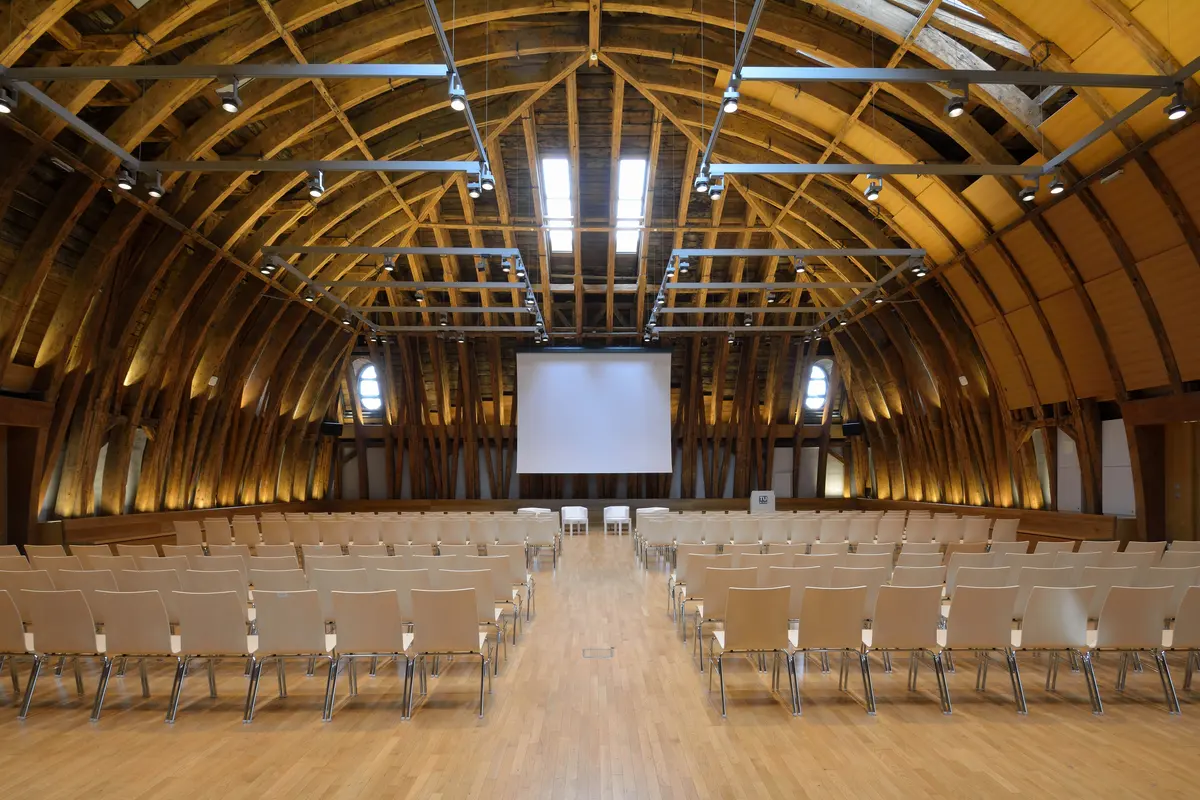
The Kuppelsaal at TU Wien, the university that hosts the Digital Humanism Initiative. Photo: P e z i,
CC BY-SA 3.0 AT
, via Wikimedia Commons.
Free and Open: Lectures, Books and Community
Not every opportunity needs an application. If you are deciding whether this field is for you, or building the background reading for a proposal, start here — all of it is free:
- The DigHum Lecture Series. Roughly every two weeks, typically Tuesday afternoons at 17:00 CET, online. Recent sessions have covered news recommender systems and democracy, the techno-colonization of academic knowledge production, and the future of computer science in academia.
- Polis Digitalis. A newer event series on securing a democratic digital space, which has hosted figures including members of the European Parliament.
- The video archive. Lectures and panels are published on the initiative’s YouTube channel.
- Open-access books. Introduction to Digital Humanism passed one million downloads in March 2026. Digitalization and Us has been translated — the Italian edition was presented in Milan in May 2026.
- The Vienna Manifesto and the Roadmap. The manifesto is the field’s founding text and the single most useful thing to read before writing any Digital Humanism application; the Roadmap sets out research and innovation priorities.
- The UNESCO Chair on Digital Humanism at TU Wien, held by Peter Knees, which gives the field an institutional anchor inside the UN system.
The initiative also publishes public policy positions — an open letter on regulating digital technologies, a statement on the EU AI Act, a statement on ChatGPT — which are useful signals of where the field’s arguments are heading.
Why This Matters for Mediterranean Researchers
The research questions this field funds are, in several cases, questions the Mediterranean region is already living through. Recent IWM Digital Humanism fellowship projects have covered the hidden bias of natural language processing in South Asian languages, digital surveillance and the human-rights costs of countering violent extremism in Kenya, AI-assisted judicial decision-making, and the EU in a weaponized digital world.
Swap the geography and those are Maghreb and Mashreq research agendas: Arabic and Amazigh language coverage in AI systems, surveillance and civic space, algorithmic decisions in public administration, and the digital dimension of EU–Mediterranean relations.
Two practical points follow. First, the calls are open to you — the IWM fellowship sets no nationality requirement, and recent cohorts have included fellows from Nairobi, Delhi, Guangzhou and Johannesburg alongside Western European and North American institutions. Second, the African summer school is the rare program that explicitly prioritizes and funds participants from the African continent, North Africa included.
How to Keep Track
Deadlines in this field move year to year, and a guide is only ever a snapshot. Three sources carry nearly every call:
- The Digital Humanism Initiative news feed at TU Wien — lectures, summer schools, conferences and calls for papers.
- The IWM open calls page — fellowships and mentoring programs, usually opening in the autumn for the following academic year.
- The DigHum newsletter, which is the lowest-effort way to catch a call before the deadline rather than after it.
Always confirm a date on the organizer’s own page before you plan around it — including the dates in this guide.
EuroMedAI opportunities
Opportunities for Mediterranean researchers, as they open
EuroMedAI connects researchers, civil-society actors and technologists across the Mediterranean working on AI, human rights and democratic governance. Join the network to follow calls, fellowships and collaborations across the region.
Cover image: the main building of TU Wien, which hosts the Digital Humanism Initiative. Photo: P e z i, CC BY-SA 3.0, via Wikimedia Commons. Program details are drawn from the Digital Humanism Initiative and IWM websites.
Frequently asked questions
- What is Digital Humanism?
- Digital Humanism is an interdisciplinary field that analyses and seeks to influence the relationship between technology and humankind, so that digitalization supports a better society and fully respects universal human rights. It was given its clearest statement in the Vienna Manifesto on Digital Humanism, and it brings together computer scientists, philosophers, lawyers, historians and social scientists.
- What is the difference between Digital Humanism and Digital Humanities?
- Digital Humanities applies digital tools and computational methods to humanities research, such as text mining a literary corpus. Digital Humanism studies the human, social, political, economic and geopolitical consequences of digital technology itself. They are different fields with different calls, and institutions such as the IWM explicitly exclude Digital Humanities projects from their Digital Humanism calls.
- What Digital Humanism opportunities exist for early-career researchers?
- The main routes are the IWM Digital Humanism Fellowship in Vienna, the ACM Europe Digital Humanism Summer School, the African Digital Humanism PhD Summer School, the Digital Humanism International Interdisciplinary Research Conference and its calls for papers, and the free DigHum Lecture Series run by TU Wien. Several of them carry stipends or fee waivers.
- Are there Digital Humanism opportunities that are free to attend?
- Yes. The DigHum Lecture Series runs roughly every two weeks online, typically on Tuesday afternoons at 17:00 CET, and is free to join. Recordings are published on the initiative's YouTube channel, and the initiative's books — including Introduction to Digital Humanism, which passed one million downloads in March 2026 — are open access.
- Can researchers from North Africa and the Middle East take part in Digital Humanism programs?
- Yes. The IWM Digital Humanism Fellowship sets no nationality or country-of-residence restriction. The African Digital Humanism PhD Summer School gives priority to participants based in Africa, which includes North African countries, and offers fee waivers and financial support. The IWM ERC Mentoring Initiative is the main exception: it is limited to researchers in Central, Eastern and South-Eastern Europe.
- Where can I find the next Digital Humanism call for applications?
- Three pages carry almost every call: the Digital Humanism Initiative news feed at TU Wien, the IWM open calls page, and the initiative's newsletter. Deadlines shift from year to year, so check the source page before you plan around a date you read anywhere else, including here.
Share