AMSA-AI at the Mediterranean AI Forum: A Co-Created Roadmap for Trust and Accessibility
At the Mediterranean AI Forum in Marseille, experts from France, Lebanon, Egypt, Tunisia and Morocco co-created a roadmap to strengthen AMSA-AI, support low-resource languages and scale it across the Mediterranean.
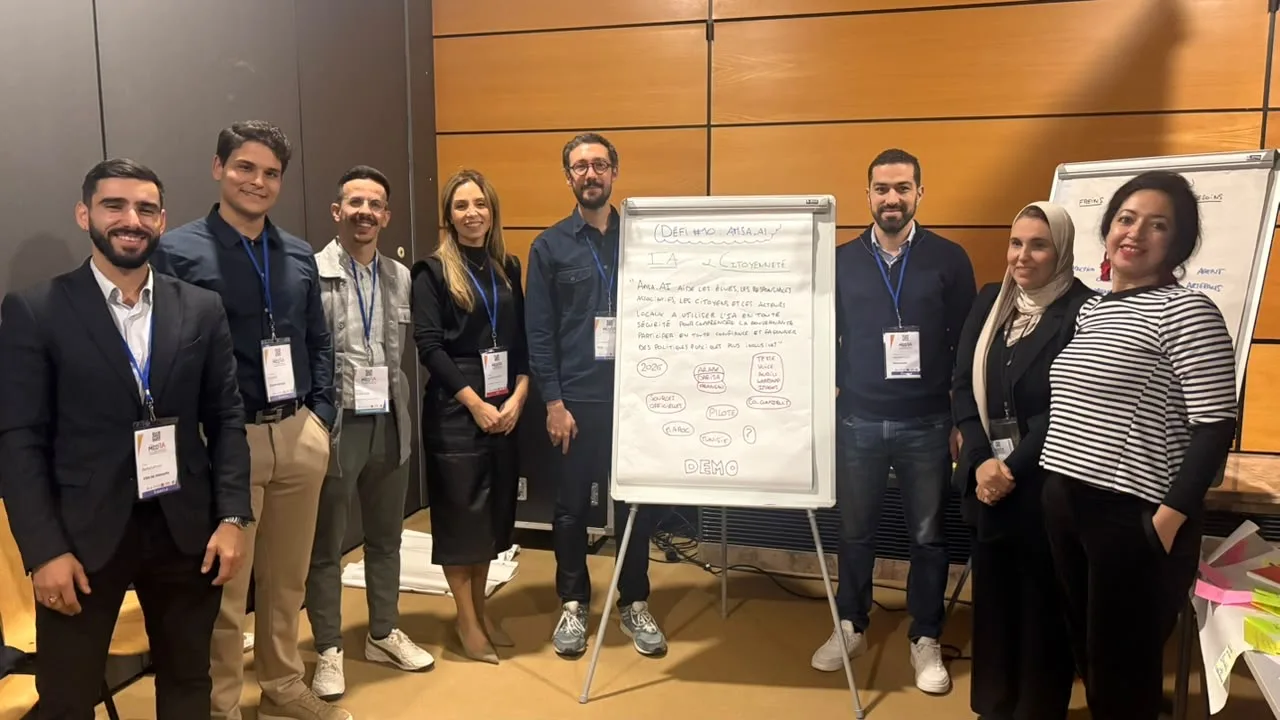
AMSA-AI came to Marseille as one of the challenges selected by the Mediterranean Artificial Intelligence Forum (FMIA). It left with a co-created roadmap. On 5 November 2026, at the Palais du Pharo, a group of experts from France, Lebanon, Egypt, Tunisia and Morocco worked with the AMSA-AI team on two questions that will shape the next phase of the initiative: how to earn users’ trust, and how to make the tool accessible to everyone it is meant to serve.
This article sets out how the co-creation process worked, what the experts discussed and the roadmap that came out of it.
126
challenges submitted to the call
16
challenge holders selected
75
experts mobilised across the track
5
countries around the AMSA-AI table
From a Call for Challenges to a Co-Creation Track
FMIA is organised under the impetus of the Interministerial Delegation for the Mediterranean (DiMed) of the French Ministry for Europe and Foreign Affairs, and co-organised by Expertise France with its partners. Its third edition asked a central question: how can the Mediterranean build artificial intelligence suited to its own needs and realities, through cooperation between both shores?
The co-creation track was the Forum’s answer in practice. Its Call for Challenges, which ran from 17 June to 10 July 2026, gathered 126 challenges from across the Mediterranean. 16 challenge holders, AMSA-AI among them, were then paired with 75 experts, researchers, entrepreneurs and institutional representatives to develop shared solutions in health, agriculture, maritime, industry and citizenship. The challenges came from both shores, including Algeria, Egypt, Lebanon, Morocco, Tunisia and France.
The aim was concrete: pilot projects, coalitions, cooperation commitments and operational roadmaps meant to continue after the Forum.
For AMSA-AI, the process ran in two stages:
- Online sessions with the experts to frame the challenge, share the pilot’s results and agree on the questions worth working on together.
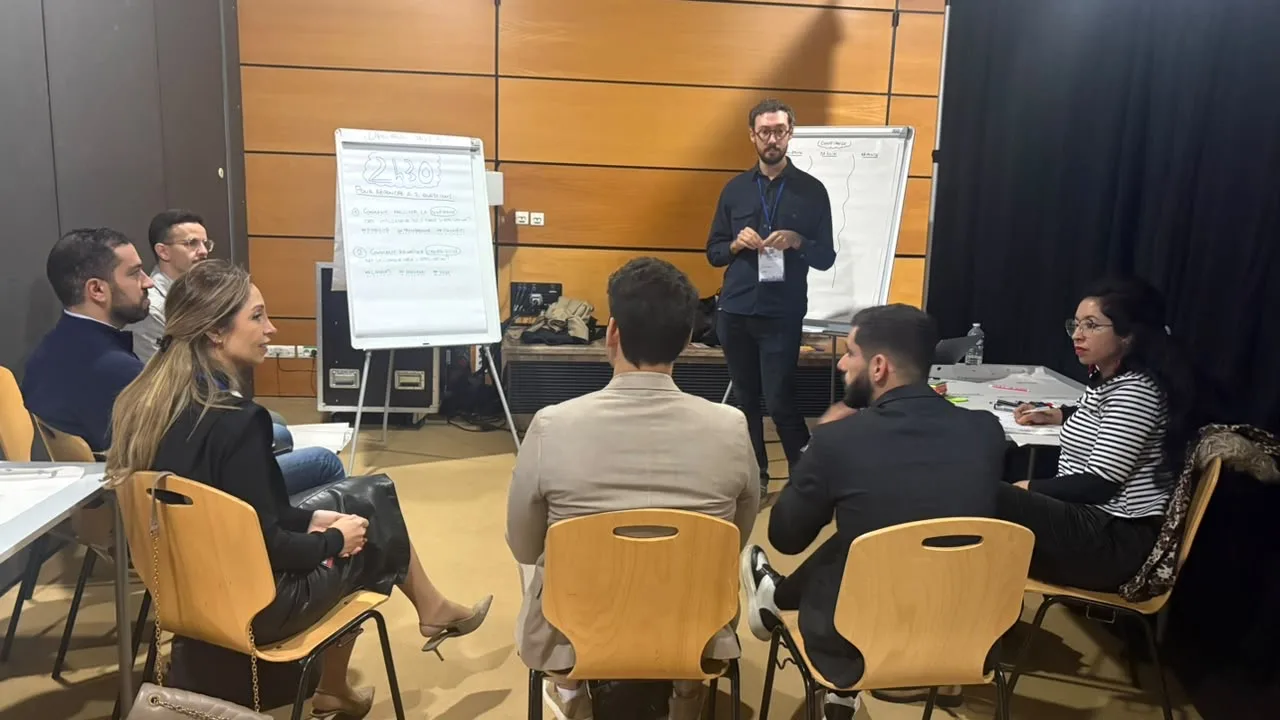
- An in-person workshop in Marseille on Forum day, where the group spent two and a half hours turning those questions into answers.
The Challenge: AI and Citizenship
AMSA-AI was listed as Challenge #10, “AI & Citizenship”. The team opened the workshop with a one-sentence description of what the initiative is for:
AMSA-AI helps elected officials, association leaders, citizens and local actors use AI safely to understand governance, take part with confidence and promote more inclusive public policies.
The team then set out where the pilot stands. AMSA-AI already works in Arabic, Darija and French, through text, voice and audio, including on WhatsApp, and grounds its answers in official sources. The pilot runs in Morocco, where it is led by AIDECA in the Béni Mellal-Khénifra region, and Tunisia has been identified as a next step. A live demo then showed the experts the mentor at work.
AMSA-AI is a pilot in inclusive, open-source AI literacy for local governance. It was developed within the Digital Democracy Initiative Middle East & North Africa (DDI MENA), led by Innovation for Change – MENA Hub with the support of CIVICUS, with EuroMedAI as its regional partner. Learn more on the AMSA-AI project page.
Two Questions in Two and a Half Hours
The facilitators gave the group two questions, each with three keywords to keep the discussion focused.
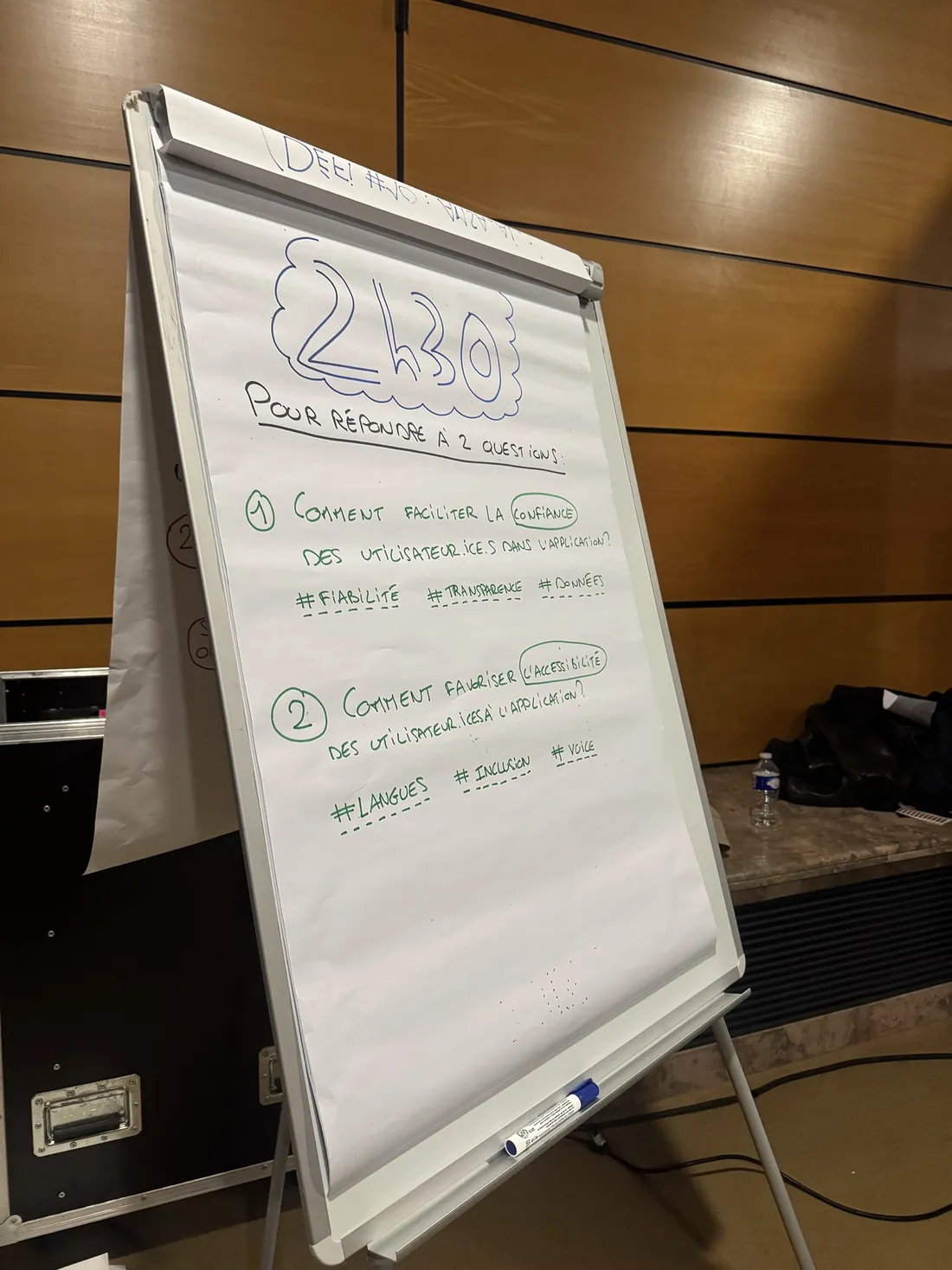
1. How do we build users’ trust in the application?
Keywords: reliability, transparency, data.
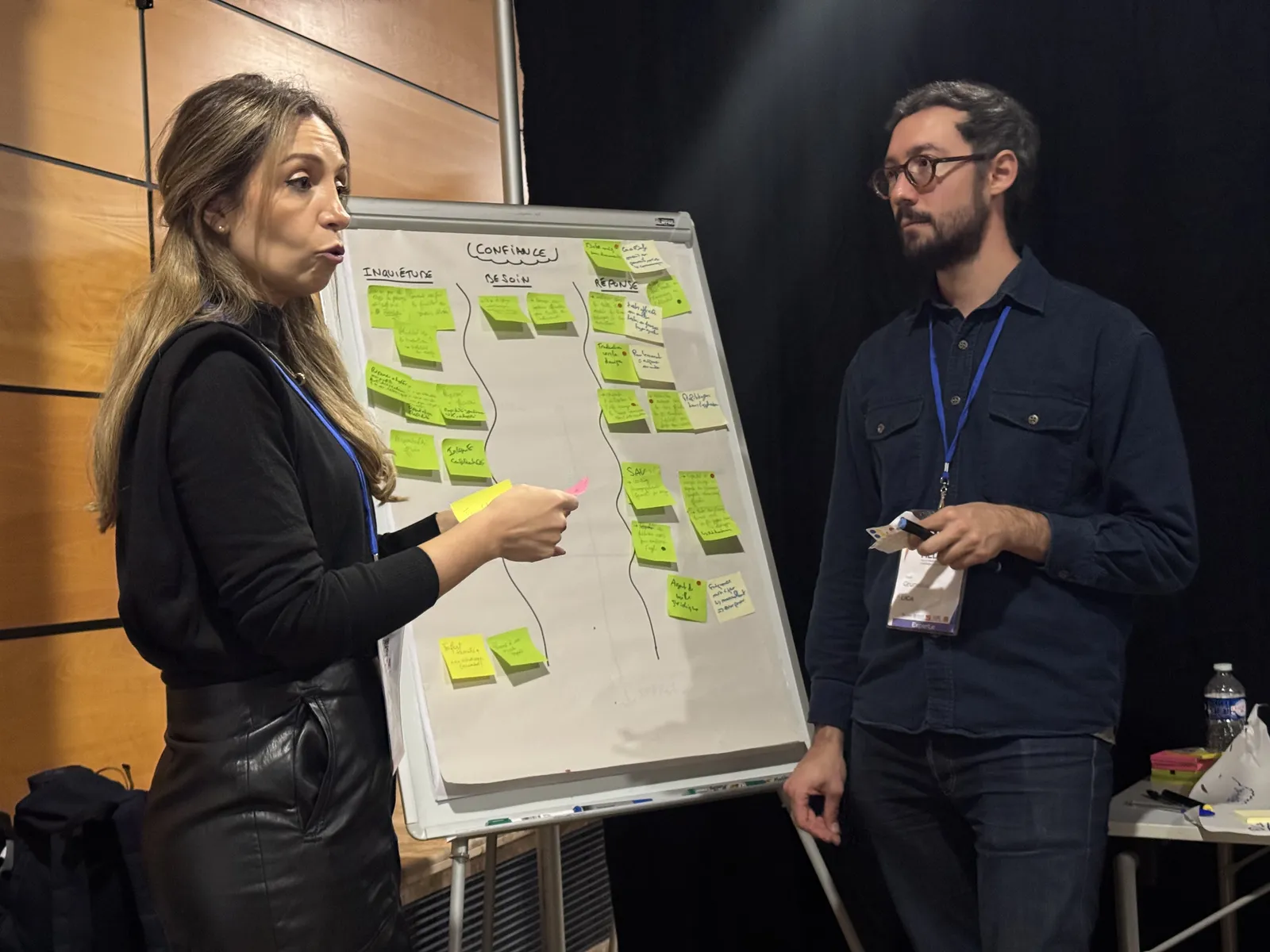
The group worked through a simple grid on the flipchart: users’ concerns, the needs behind them and the responses AMSA-AI can offer.
For an elected official or a civil-society leader, trust is not a feeling about technology. It depends on whether the answers are right, whether they can be checked and whether personal or sensitive information is safe. The discussion came back to three points.
- Reliability. Answers have to be accurate and kept up to date as laws, procedures and local rules change. Making the platform technically stronger and its answers more dependable came first on the list. One proposal was a monitoring agent that tracks legal and regulatory updates so that the content does not drift out of date.
- Transparency. Users should see where an answer comes from, understand what the tool can and cannot do and know when to turn to an official, a lawyer or another person instead. Grounding answers in official sources, and saying so clearly, is part of the product rather than a disclaimer.
- Data. Responsible data governance is a precondition for use. People will not ask real questions about their council or association if they are unsure what happens to what they type.
The group also proposed responses beyond the tool itself, such as a user support channel so that people have somewhere to turn when an answer is unclear. Trust also means accountability: users need to be able to question the tool, check it and hold its use to account.
2. How do we make the application accessible to everyone it is meant to serve?
Keywords: languages, inclusion, voice.
- Languages. Accessibility starts with language. The experts called for much stronger support for low-resource languages and dialects, which mainstream AI tools still serve poorly. Better translation into Darija came up repeatedly, and the same effort will be needed for each country and dialect that AMSA-AI reaches.
- Voice. Voice interaction opens the tool to people who are less comfortable with written text and makes it easier to use on a phone, in the channels people already rely on, such as WhatsApp.
- Inclusion. Inclusion has to be designed in from the start. Women, young people and rural communities should shape the tool, not just use it. That continues the co-design approach of the pilot, in which 115 local stakeholders have already taken part in workshops.
The Roadmap
The answers to both questions became a roadmap with four priorities.
| Priority | What it means for AMSA-AI |
|---|---|
| Technical feasibility and reliability | A sturdier platform that is easier to adapt, deploy and maintain, with answers kept accurate as laws and procedures change. |
| Low-resource languages and voice | Deeper support for dialects such as Darija and for voice interaction, so that AI literacy reaches people in their own language. |
| Local AI readiness and accountability | Help for municipalities, elected officials and civil society to use AI safely, ask the right questions and hold its use to account. |
| Mediterranean scale-up | Taking the model from its pilot in Morocco to Tunisia and other countries, through country partners on both shores. |
The roadmap builds on work already under way. EuroMedAI has published a call for country partners to adapt AMSA-AI in Algeria, Tunisia, Jordan and Lebanon, and our research on AI readiness in the South Mediterranean shows why local capacity matters as much as national strategy.
A Day Across Both Shores
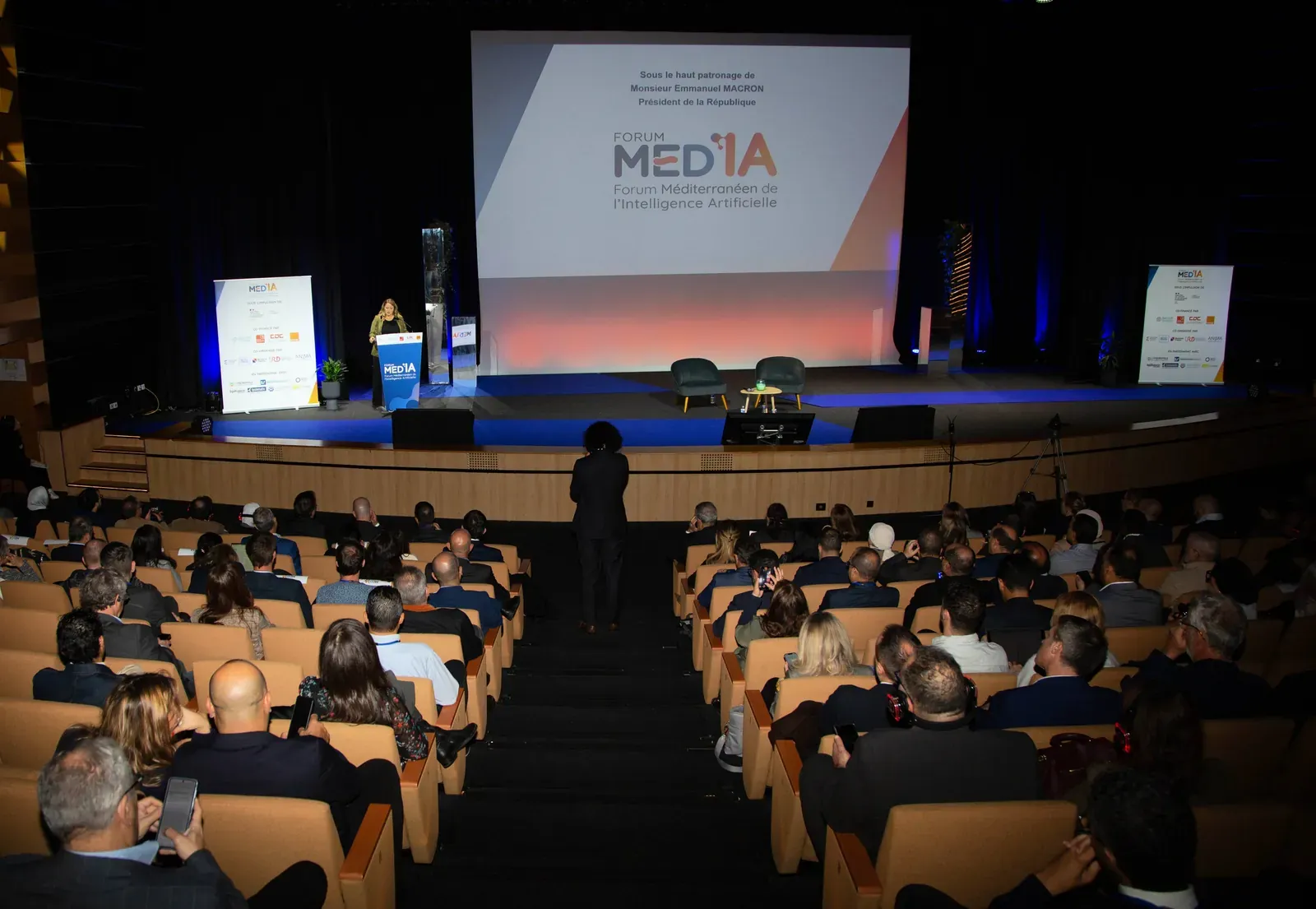
The workshop was part of a full day at the Palais du Pharo. More than 70 speakers from over ten Mediterranean countries took the stage in plenaries on the strategic report on AI in the Mediterranean, talent, sovereignty, the environmental impact of AI and investment. The programme closed with the restitution of the co-creation workshops to the plenary, alongside citizens’ recommendations from the Forum’s citizen track.
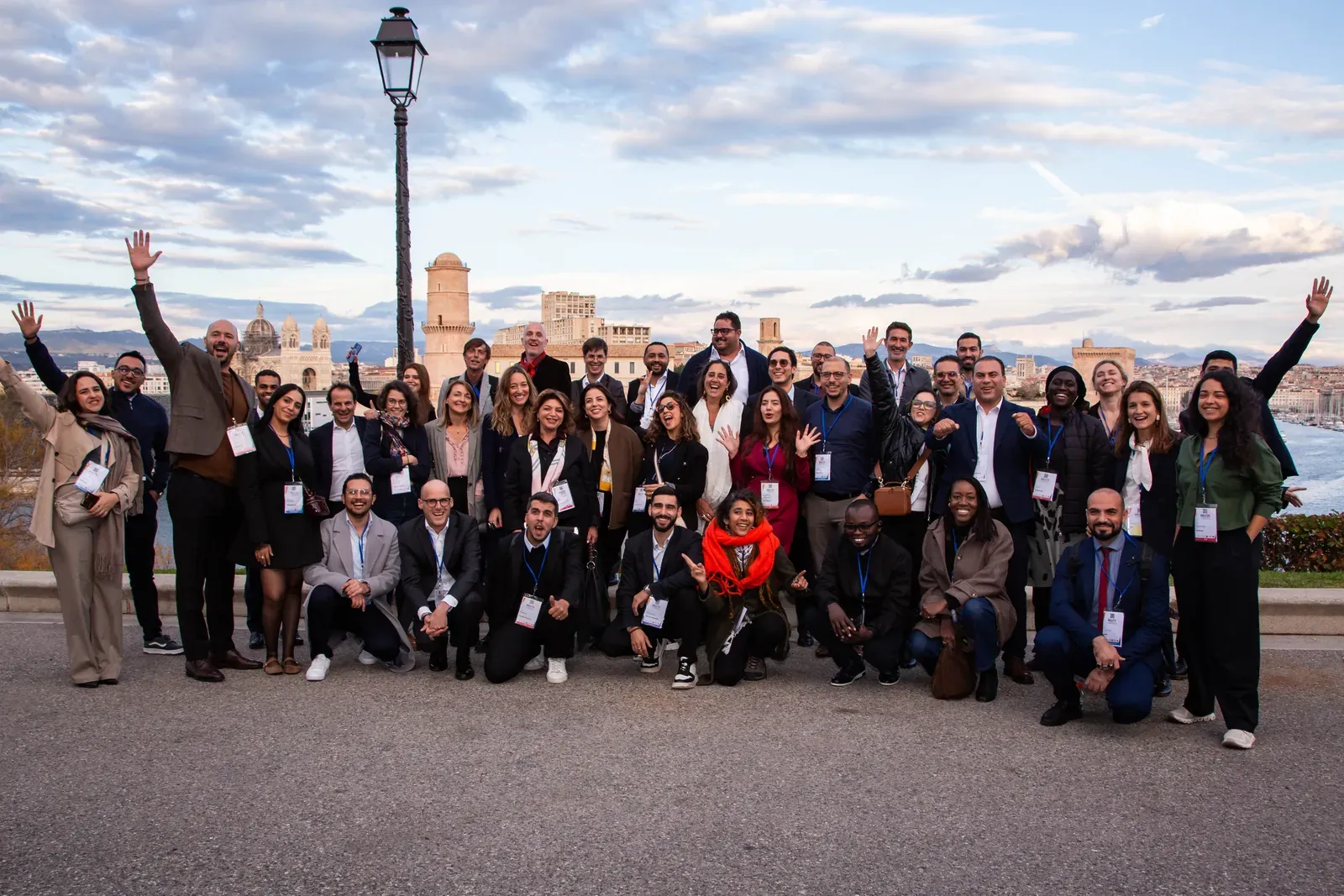
The EuroMedAI delegation came to Marseille with experts from both shores, as we set out in our preview of the Forum. The co-creation track gave that delegation a concrete task and a shared result.
What Comes Next
The co-creation track was designed to produce commitments that last beyond the Forum, and we intend to follow through. Over the coming months, the AMSA-AI team will:
- Turn the trust and accessibility proposals into concrete features and safeguards.
- Work with language and technology partners to extend support for Darija and other low-resource languages and dialects, including through voice.
- Continue conversations with the experts and organisations met in Marseille, and with country partners in Tunisia and beyond.
Thank You
We thank the experts who gave their time and ideas, online and in Marseille. We also thank DiMed, Expertise France, Facteur C and all the partners of the co-creation track for a process that ends in commitments, not just conversations. AMSA-AI is led on the ground by AIDECA. Its pilot was made possible by DDI MENA, Innovation for Change – MENA Hub and CIVICUS.
If you work on AI literacy, language technology or local governance in the Mediterranean and want to help build what comes next, get in touch or write to contact@euromedai.org.
Frequently asked questions
- What was the AMSA-AI co-creation workshop?
- AMSA-AI was one of the challenges selected for the co-creation track of the Mediterranean Artificial Intelligence Forum (FMIA). The process began with online sessions and ended with an in-person workshop at the Palais du Pharo in Marseille on 5 November 2026, where experts from France, Lebanon, Egypt, Tunisia and Morocco worked on how to strengthen the initiative.
- Which questions did the workshop address?
- The workshop had two and a half hours to answer two questions: how to build users’ trust in the AMSA-AI application, around reliability, transparency and data; and how to make the application accessible to the people it is meant to serve, around languages, inclusion and voice.
- What did the workshop produce?
- A roadmap with four priorities: strengthen technical feasibility and reliability, extend support for low-resource languages and voice, build local AI readiness and accountability, and scale AMSA-AI from its pilot in Morocco across the Mediterranean.
- How can I get involved in AMSA-AI?
- Organisations working on AI literacy, language technology or local governance in the Mediterranean can write to contact@euromedai.org or read the AMSA-AI call for country partners on euromedai.org.
Share